Saturday, March 26, 2011

1968-69 St. Louis Blues Barclay Plager Jersey

One of the most popular players in St. Louis Blues history, Barclay Plager was born on this date in 1941. Barclay was the oldest of the three Plager brother to play in the NHL, followed by Bill and Bob.

Barclay began his road to the NHL playing for the Peterborough Petes on the Ontario Hockey Association in 1957-58. During his four seasons playing for the Petes, Barclay established a himself as a rugged, tough defenseman, a reputation only enhanced by a fight he had with his brother Bob, who was playing for the Guelph Royals.

Barclay, accidentally he claimed, jammed his stick in Bob's mouth and Bob responded with his fists. "We went at it pretty good on the ice," Bob remembers, "but they broke it up. As we went into the penalty box he gave me a shove and we started fighting again. Then, after we were thrown out of the game, we continued to battle in the runway leading to the dressing rooms. But I got the best of him for the first time. Afterwards I met him in a restaurant across the street from the rink. I was sitting there eating when he walked in. We looked at each other and I didn't know what was going to happen. The whole Guelph team rushed into the place to see. Everyone figured we'd go at it again, but Barclay just looked me in the eye and said, 'Can you lend me five dollars?'"

Like many players of his era, Plager found himself mired in the minor leagues, unable to crack the exclusive ranks of the NHL, which was then only six member clubs which afforded approximately 30 jobs to defensemen league wide.

Plager began his travels through the minor leagues with a stop in Hull in 1961-62, Edmonton and Pittsburgh in 1962-63, Omaha in 1963-64, where he had an outstanding season with 75 points where he led the league in both assists and penalty minutes by wide margins as Omaha captured the CPHL's inaugural Adams Cup, and Springfield in 1964-65 and 1965-66 before splitting time between Springfield and Omaha in 1966-67.

Just when it looked as if Plager would toil in the minors for the remainder of his playing days, the NHL expansion of 1967-68 doubled the size of the league overnight, creating twice as many job opportunities than previously available.

Barclay Plager jersey

With his rights acquired by the St. Louis Blues from the New York Rangers, Plager embarked on a new phase of his career in the NHL. While the Blues finished third in the "Western" division, comprised of the six new expansion clubs, they outlasted both the Philadelphia Flyers and Minnesota North Stars to qualify for the Stanley Cup Finals in only their first season in the NHL. Although Plager only played in 49 of the Blues games due to spending 20 games with the Buffalo Bisons of the AHL, Plager's no nonsense approach to his game led to a league leading 153 penalty minutes. Barclay was also joined on the Blues blueline by his brother Bob who arrived via a trade with the Rangers.

In 1968-69, backed by veteran goaltenders Glenn Hall and Jacques Plante, Plager and the Blues defensive corps of Al Arbour, Jean-Guy Talbot, veteran Doug Harvey, Noel Picard, Jim Roberts, Bob Plager, Terry Crisp and Ron Schock shockingly allowed the least goals against by a country mile, 39 less than the New York Rangers and 68 less an any of their expansion cousins to win the Vezina Trophy for Hall and Plante.

"We did anything to protect the goaltender," recalled Bob Plager. "The greatest time for us was the year we won the Vezina Trophy. Glenn Hall and Jacques Plante were in goal and we only allowed 157 goals. That record will probably never be broken. Winning the Vezina was the finest reward anyone could get."

Of note, Bill Plager arrived in St. Louis for a pair of games, giving St. Louis all three brothers at the same time.

Plager Brothers
Barclay, Bill and Bob Plager lacing up their skates for the Blues

The Blues again returned to the Stanley Cup Finals after eliminating the Flyers and Los Angeles Kings.

The Blues were again stingy on defense, coming in second to Boston but 46 goals better than any other "Second 6" franchise and again made their annual trip to the finals, but once again they were swept by an Original 6 franchise. Barclay led the Blues in trips to the penalty box that season, besting his brother Bob 128 penalty minutes to 113.

Barclay Plager jersey

Barclay, Bob and Bill would play for the Blues during parts of three seasons, with the limiting factor being mainly Bill's number of games played, as he had 2 in 1968-69, 24 in 1969-70 and 36 during his final season with the Blues in 1970-71 before moving on to the Atlanta Flames and considerably more playing time.

For the next six seasons, Barclay would continue to provide his rock-steady defensive play and offensive output, as he would play no less than 54 games while scoring between 26 and 33 points, which was Plager's NHL career high. Additionally, he was named team captain in 1972, a position he would hold until 1976.

After one more season in St. Louis, Barclay would play just two final games for the Blues before being named as a player/coach for the Kansas City Blues in 19767-77. He remained an effective player and as well as a team leader, as coach Plager guided his team to the CHL finals, while Plager the player was named as the league's MVP.

He served the same dual roles in 1977-78 with the Salt Lake Golden Eagles, which would prove to be his final season as an active player.

He remained with the Blues organization as a scout and an assistant coach before being named the club's head coach for the 1978-79 season.

Barclay Plager jersey

His number 8 was retired by the Blues on March 24, 1981.

Plager's final NHL stats were 44 goals and 187 assists for 231 points along with 1,115 penalty minutes, which included leading the team on four separate occasions, and 15 broken noses, a testament to his bruising, shot blocking ways which earned him the hearts of the fans.

Today's featured jersey is a 1968-69 St. Louis Blues Barclay Plager jersey as worn by the Blues during their second ever season, one in which they would make it all the way to the Stanley Cup Finals.

This jersey style, introduced during the Blues first season of 1967-68, would remain in use through 1972-73 when the colors of the striping were reversed, with names arriving on the back in 1977-78. That similar style would survive through the 1978-79 season when additional trim was added to the shoulder yoke, keeping it in line with the striping on the shoulders of the white jerseys.

St Louis Blues 68-69 jersey

Bonus Jersey: Today's bonus jersey is a 1973 NHL All-Star Game Barclay Plager jersey. Plager played in the NHL All-Star Game on four occasions, 1970, 1971, 1973 and 1974. This particular jersey was worn by Barclay Plager during the 1973 edition held in New York's Madison Square Garden.

This was the first year for this brand new style of All-Star jersey and it would be worn for eight All-Star Games through 1981, skipping 1979 when a slightly different jersey was worn for the Challenge Cup against the Soviet Union instead of the normal all-star game format.

NHL All-Star 1973

Today's video selection features the Plager brothers, Barclay, Bob and Bill.


Friday, March 25, 2011

Why Rose Why?


I'm sure those of you that saw Rose McGowan on Law and Order SVU on Wednesday night were as disappointed as I was to see what she has done to herself. Her face just looks awful and fake. Her lips are over-injected, her cheeks are over-injected, and it looks like she has had her nose worked on again. Her whole face seemed puffy and abnormal. She could have done some correction without over-doing it, which she clearly did. By looking at early pictures of her (the Charmed era), you can see she had a little work done on her nose but it fit her face beautifully and I think she looked great. Now she has just gone too far and it is disappointing.

The sad thing is that I thought she was a pretty girl before all this and I liked her. She took on tough-girl roles and that's why women liked her and why men were attracted to her. I was willing to overlook the whole Marilyn Manson relationship and the chain-link dress but not this. When you take a pretty face and do this to it, it is just a shame. For those of you that forgot how pretty she used to be, I have added an older photo of her.


You can see Dr. Walden's comments on this on Popeater.com at http://www.popeater.com/2011/03/24/rose-mcgowan--plastic-surgery/


this week in iphone pics

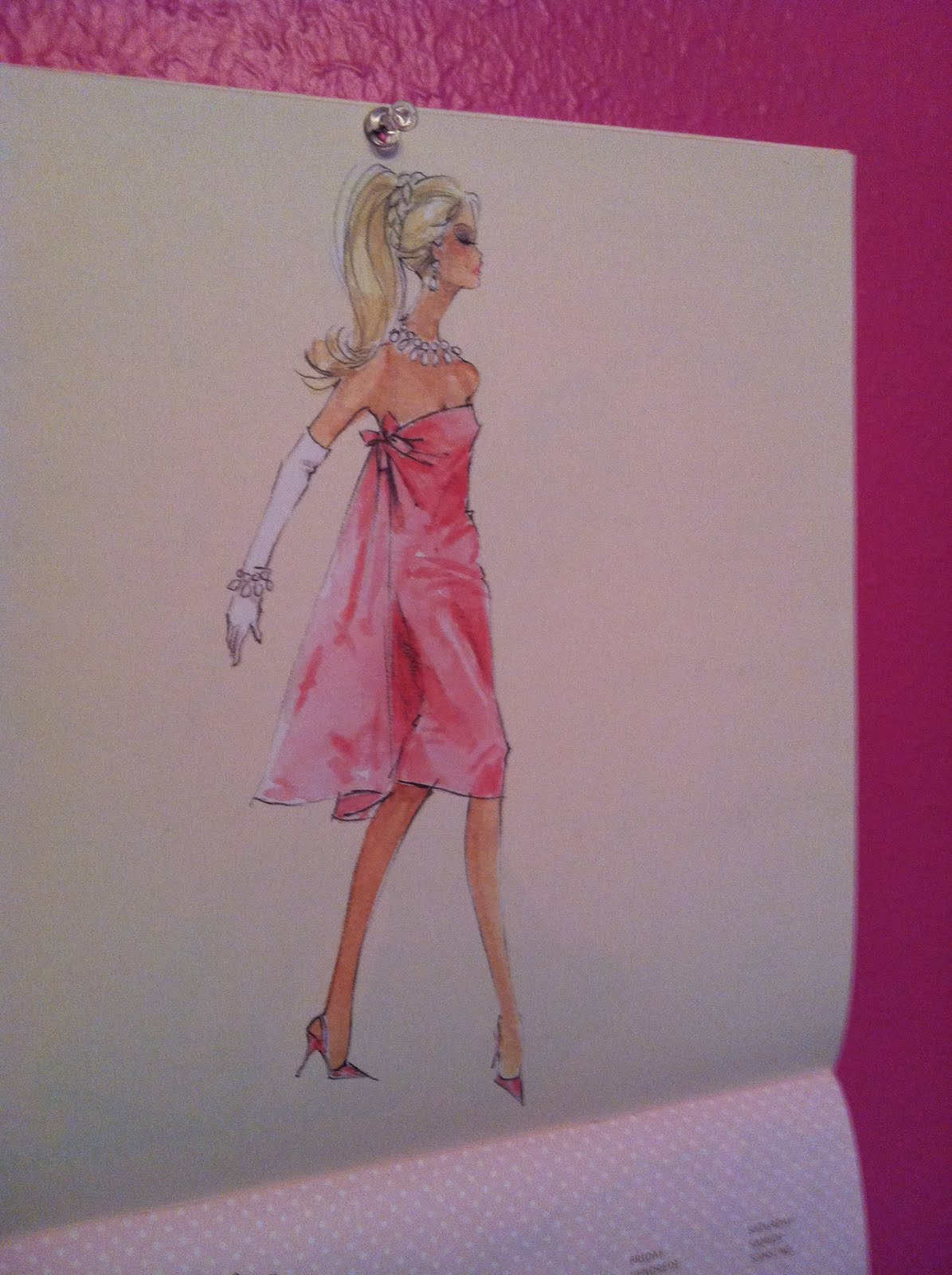
"March" in the Barbie calendar my boyfriend gave me: Cookies and brownies I made for house guests:
Photobooth pictures I forgot we took at law formal:

Seiko Officials Address the Crisis in Japan


Seiko officials during press conference at Baselworld.

BASEL, Switzerland - Seiko Holdings Corp. officials said Thursday that one of its factories has been closed and that production has been significantly reduced due to the earthquake and tsunami in Japan.

“Some of the production has been slowed and a factory has been stopped because of a lack of electricity and gasoline, said Shinji

Seiko Officials Address the Crisis in Japan


Seiko officials during press conference at Baselworld.

BASEL, Switzerland - Seiko Holdings Corp. officials said Thursday that one of its factories has been closed and that production has been significantly reduced due to the earthquake and tsunami in Japan.

“Some of the production has been slowed and a factory has been stopped because of a lack of electricity and gasoline, said Shinji

Thursday, March 24, 2011

1916-17 Seattle Metropolitans Bernie Morris Jersey

The Pacific Coast Hockey League was founded in 1911 by Frank and Lester Patrick. After three seasons the league expanded into the United States for the first time with the addition of the Portland Rosebuds, who were joined the following season by the Seattle Metropolitans.

Seattle Metropolitans

The Metropolitans finished third in the four team league with a 9-9 record. They were led in scoring by Bernie Morris, who scored 23 goals and 9 assists in the 18 game schedule while Harry "Hap" Holmes held down the goaltending duties.

During the Metropolitans second season, Morris again led the club in scoring with a stellar 37 goals and 17 assists for 54 points in 24 games to lead the league in scoring as Seattle edged the Vancouver Millionaires to the regular season title with a 16-8 record. Additionally, Holmes led all goalkeepers that season with a 3.3o goals against average, well over a goal better than his next closest competition.

Unlike the Eastern National Hockey Association, which held a post season playoff to determine the league champion, Seattle advanced to the Stanley Cup Final simply by virtue of finishing first.

1917 Stanley Cup Finals
The 1917 Stanley Cup finalists, the Seattle Metropolitans and the Montreal Canadiens

The Metropolitans hosted the defending cup holders, the Montreal Canadiens, in a best of five series at the Seattle Ice Arena. The Canadiens defeated Seattle 8-4 in Game 1 held under PCHA rules as Didier Pitre scored four times for Montreal.

Game 2, held under NHA rules, saw the Metropolitans even the series with a dominant 6-1 win. Alternating back to PCHA rules, Seattle and Holmes again held Montreal to a single goal while Seattle scored 4 to take a 2-1 series lead.

Held on this date in 1917, Game 3 was all Seattle. Morris alone outscored Montreal, and by a wide margin, as he scored 6 of the Metropolitans goals as they won going away by a score of 9-1 to become the first team based in the United States to win the Stanley Cup in it's 24 year history. During the series Morris would account for 14 of Seattle's 23 goals.

1916-17 Seattle Metropolitans

The following season the Metropolitans would finish first overall during the regular season with an 11-7 record, but would lose their hold on the Stanley Cup when they were defeated in the newly instituted PCHA playoffs.

They turned the tables in 1918-19 by defeating the Millionaires to advance to the 1919 finals. Tragically, after the series with the Canadiens was tied at 2-2-1, several of the players from Montreal fell ill with the Spanish Influenza, which caused the cancellation of the remainder of the series and would claim the life of Montreal's Joe Hall.

1919 Stanely Cup engraving
The 1919 Stanley Cup engraving

The 1919-20 PCHA season was extraordinarily tight, with the Metropolitans finishing first with a 12-10 record to the Millionaires 11-11 and the Victoria Aristocrats 10-12. Seattle again won the PCHA playoff and qualified for the Stanley Cup Finals for the third time in four years, but came up short in five games against the Ottawa Senators.

Seattle finished with a 12-11-1 record in 1920-21 and missed out on a chance to return to the Stanley Cup Finals with a loss in the PCHA playoff. Parity again reigned in 1921-22 as Seattle finished first at 12-11-1 over the Millionaires at 12-12 and Victoria just behind at 11-12-1.

With games against teams from the Western Canada Hockey League counting in the PCHA standings, the Metropolitans finished last in the league despite a .500 record of 15-15.

The same system was in place for the 1923-24 season, and with the WCHL teams having improved since the previous season, Seattle oddly finished with the first losing record in franchise history at 14-16, yet finished first overall in the PCHA, ahead of Vancouver's 13-16-1 mark.

Seattle lost the two-game, total-goals playoff with Vancouver 4-3, which would turn out to be the final game for the Metropolitans, as the Seattle Ice Arena owners did not renew the team's lease, which led to the club ceasing operations, which in turn brought a close to the PCHA.

During their nine year run, Frank Foyston would lead the club in scoring with 139 goals and 163 points, followed by Morris with 139 points. Holmes would lead the PCHA in goaltending five times in the six years he was a member of the Metropolitans, including four in a row from 1918-19 to 1921-22.

Today's featured jersey is a 1916-17 Seattle Metropolitans Bernie Morris jersey as worn when he scored six goals in the Metropolitans Stanley Cup clinching goal on this date in 1917.

The Metropolitans would wear a barberpole style jersey throughout their history with minor variations to their "S" crest until 1921, when the word "Seattle" diagonally across the chest.

Morris first played for a number of senior level teams prior to joining the Victoria Aristocrats of the PCHA in 1914-15. He then joined Seattle for eight years. In 1923-24 he was traded to the Calgary Tigers of the WCHL and played there for a season and a half before moving east to become a member of the brand new Boston Bruins of the NHL for six games. After being released by the Bruins, Morris returned to the WCHL and became a member of the Regina Capitals. He played the final five seasons of his hockey career with a variety of teams in a series of minor leagues.

Seattle Metropolitans 1916-17 jersey


Thomas Prescher’s Personal Touch


Thomas Prescher's Mysterious double-axis toubillon

BASEL, Switzerland - I had the pleasure to meet independent watchmaker Thomas Prescher and view his entire stock of beautiful and extremely complicated timepieces Thursday at Baselworld, the world's largest watch and jewelry fair. Prescher and one other person produce all of their products from their headquarters in Twann, Switzerland. “We don