Showing posts with label Minnesota North Stars. Show all posts

Wednesday, June 8, 2011

1985-86 Minnesota North Stars Brian Lawton Jersey

Brian Lawton led Mount St. Charles Academy to the Rhode Island state high school championship in 1982 after scoring 45 goals and 88 points in just 26 games. In 1982-83 he not only repeated that feat with 40 goals and 83 points in 23 games and a second consecutive state championship, but he played for the United States at the 1983 World Junior Championships, held in Leningrad in the Soviet Union.

On this date in 1983 in Montreal, the Minnesota North Stars selected Lawton with the first overall pick in that year's NHL Entry Draft, giving him the distinction of being the first American ever taken first overall as well as the first, and to date only, United States high school player taken first overall.

Lawton made the jump straight to the NHL without the aid of any further seasoning in college (he had signed a letter of intent to play for Providence College), Canadian Juniors (Verdun of the QMJHL held his draft rights) the minors or even the Olympics unlike fellow American Pat Lafontaine, who was taken third overall in the same draft. The pressure on him to perform was high thanks to his lofty draft status, but it was made even higher with the unfortunate choice of jersey #98 in light of the stratospheric numbers being put up by #99 Wayne Gretzky at the time.

Lawton North Stars

The North Stars planned to bring Lawton along slowly, but a separated shoulder and stretched knee ligaments also contributed to his playing in just 58 games during his rookie year in which he scored 10 goals and 31 points.

Lawton North Stars

Before the start of the following season, Lawton was a member of the United States National Team for the 1984 Canada Cup, a prestigious assignment for a 19-year-old. He rose to the occasion, scoring five goals in six games.

Things went terribly wrong for Lawton with the North Stars in 1984-85, as he managed just five goals and six assists for 11 points in 40 games with Minnesota, which was 21st on the team in scoring and placed him behind even defenseman Randy Velischek's 13 points. He was sent to the Springfield Indians of the American Hockey League three separate times after failing to produce in Minnesota. The relationship between Lawton and the team was not helped when North Stars general manager Lou Nanne was quoted in Sports Illustrated as having said, "If I had to do it all over again, I'd take [Tom] Barasso. I'm not an idiot."

In an attempt to start over, Lawton ditched jersey #98 for the 1985-86 season and instead chose #8, which just happened to have belonged to the franchise's first big star, Bill Goldsworthy. With Minnesota for the entire season, Lawton scored 18 goals and 35 points.

Lawton North Stars

The pressure to perform on Lawton was now coming from a different place - comparison to those drafted immediately after him. #2 Sylvain Turgeon of the Hartford Whalers was coming off a 79 point season, the Islanders Lafontaine had 38 goals and 70 points in 1986-87, Steve Yzerman, chosen fourth, was already captain of the Detroit Red Wings and would score 90 points in 1986-87 and Buffalo Sabres goaltender Barasso took the league by storm when he won both the Calder and Vezina trophies as a rookie in 1984.

Lawton did show improvement offensively with the only 20 goal season of his career with 21 as well as a career high 44 points. With the North Stars missing the playoffs, Lawton made his final appearance for the United States, this time at the 1987 World Championships.

The 1987-88 season was one of stagnation, as Lawton played in 74 games, scoring 17 times and totaling 41 points, although his +/- rating dropped from a +20 to a -10.

Lawton's relationship with the North Stars reached it's low point in the North Stars training camp in 1988 when the club wanted to assign him to Kalamazoo of the IHL to start the season. He refused to report and threatened to retire if the club did not trade him. He was suspended by the team and three days later he was sent to the New York Rangers.

That was the start of a meandering trip through the NHL, as Lawton was only a member of the Rangers for 30 games, during which he scored 17 points, prior to being dealt to the Hartford Whalers for the second half of the 1989-90 season.

Lawton Whalers

He began the following season with the Whalers, but after 13 games he was claimed off of waivers by the Quebec Nordiques in early December after 3 points in 13 games. His time with Quebec lasted 14 games before they released him despite his 11 points at the time. The Boston Bruins then signed him in early February and after eight games with no points he finished the season with five games for the Maine Mariners of the AHL.

Lawton Nordiques

The Los Angeles Kings singed Lawton for the 1990-91 season, but he never suited up for the Kings, instead spending the entire season with the Phoenix Roadrunners of the IHL where he finished second in team scoring with 26 goals and 66 points as well as 13 points in 11 playoff games.

Looking for all the scoring help they could get, the expansion San Jose Sharks inked Lawton to a contract for their inaugural season, but foot and knee injuries limited him to 59 games and 37 points, which was good for fourth place on the low scoring Sharks.

Lawton Sharks

The 1992-93 season, the tenth of Lawton's career, saw him play 21 games for the Sharks and nine for their top IHL affiliate the Kansas City Blades before leaving the club which resulted in a trade to the New Jersey Devils organization in late January that saw him finish out the season with the Cincinnati Cyclones in the IHL before he retired as a player.

His final NHL totals were 483 games played, 112 goals and 154 assists for 266 points. He remains the only player in NHL history to ever wear the number 98.

Today's featured jersey is a 1985-86 Minnesota North Stars Brian Lawton jersey. This style North Stars jersey was first worn in 1978-79, and while the white jerseys had the addition of black stripes and outlines in 1981-82, black did not arrive on the green jerseys until 1988-89, seven years later!

This was Lawton's first season wearing number 8 after changing away from the ill-advised #98 and the inevitable comparisons to Wayne Gretzky that it brought on top of the expectations of being the first American born player, as well as the first US high school player ever taken first overall.

Minnesota North Stars 85-86 jersey

Today's video highlight is Lawton batting a puck baseball style past future NHL star Dominik Hasek of Czechoslovakia during the 1984 Canada Cup.


Saturday, May 14, 2011

1969-70 Minnesota North Stars Gump Worsley Jersey

Yea, we know this is supposed to be a hockey jersey blog, but with today being the birthday of Lorne "Gump" Worsley, we simply cannot let the occasion pass by without taking the opportunity to post our all-time favorite hockey card.

It's a Topps 1971-72 card #241, and it's a thing of beauty.

Photobucket

Photobucket

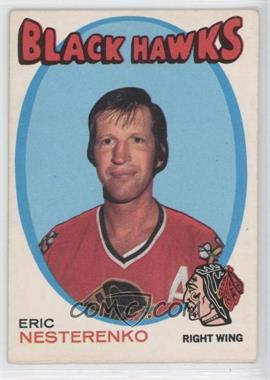
No, it's not glossy, it's not centered and it looks like it may have been cut out of the sheet of cards with a rusty scissors, but how can you look at that card and not smile? Even the curved font for team name seems to mimic his happy smile. We love this card so much we even printed it on a t-shirt.

Not all the cards in the 72-72 Topps set look quite this bad either. The
Penguins for example, made out good, getting a festive red background with yellow type for the team name, while the Blackhawks must have had a fan on the design team, walking away with a nice light blue with red type. But not the North Stars. Oh no...

Pink.

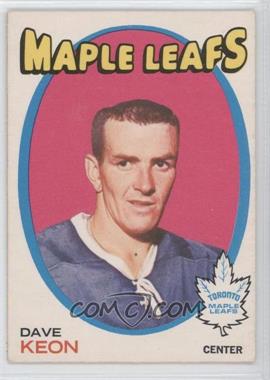
Tough, macho hockey pink. With garishly jarring green type. Yea, the Maple Leafs also got pink, but a darker, more menacing pink with a complimentary yellow team name. But when it came time for the North Stars, the designers looked at their color chart and realized they had crossed off all the other color combinations and what was left was baby girl pink paired with forest green. Bleah. How horrible is that?

Then, just check out the photo of the happy Gumper! Does that simply rock or what? You just want to buy that guy a beer. This man is feeling no pain and has life by the tail. Perhaps it was too many shots to the head, what with Gump being one of the last holdouts to actually not wear a mask while playing goal.

Yea, for you youngsters out there, read that again slowly to make sure you comprehend what you just heard. The man played goalie in the NHL against the likes of Bobby Hull without wearing a mask. For years. 24 years in total, winning the Calder Trophy as Rookie of the Year on a last place team, 2 Vezina Trophies as the League's Best Goaltender, 4 Stanley Cups and eventual election into the Hockey Hall of Fame.

Photobucket

But here's the funny part. This seemingly fearless man who faced some of the most wicked slapshots coming off the unregulated curved sticks of the time was afraid to fly. You'd think that if he was going to have a fear, it might be the obvious one coming at his face.

Photobucket

Gump Worsley tended goal for the North Stars during the first ever NHL game we attended as a kids back in early 70's in a game vs. the Los Angeles Kings, and for that reason alone he will always have a soft spot in our hearts, but being the subject matter of the greatest hockey card of all time doesn't hurt either. Not like a puck to the face.

Today's featured jersey is a 1969-70 Minnesota North Stars Gump Worsley jersey. The North Stars started out with essentially this same jersey in 1967. After a false start saw them drop the lace up collar worn at the very start of their existence, the North Stars added the white shoulder yoke in 1968-69 and would continue to wear this style through the 1974-75 season, by which time Worsley had retired.

Minnesota North Stars 69-70 jersey

Today's video section is the wonderful Legends of Hockey profile of Gump Worsley.


Tuesday, March 29, 2011

1987-88 Minnesota North Stars Jon Casey Jersey

Born on this date in Grand Rapids, Minnesota in 1962, goaltender Jon Casey played college hockey for the University of North Dakota Fighting Sioux from 1980-81 until 1983-84, which included an appearance at the World Junior Tournament in 1982 for the United States and two NCAA national championships in 1980 and 1982.

1981-82 UND Sioux
Casey, front left, celebrates the 1982 NCAA national championship

Following his college career, the undrafted Casey would sign a free agent contract with the Minnesota North Stars in time for him to see action in two games at the conclusion of the 1983-84 season, which included his first NHL victory.

He spent the following season honing his craft with the Baltimore Skipjacks of the AHL, going 30-11-4 in 46 games. The following season was split between the Springfield Indians (9 games) and North Stars (26 games), with whom he went 11-11-1.

1986-87 saw Casey again spend the entire season in the minors, with both the Indians and the Indianapolis Checkers, where he spent the majority of his time. While he made 14 appearances with Minnesota in 1987-88, most of his action came with the Kalamazoo Wings of the IHL with whom he went 24-13-5.

The departure of Don Beaupre to Washington opened up a roster spot for Casey in Minnesota in 1988-89, who assumed the starting role with 55 games played, a total which increased to 61 the following year during which he set a career high with 31 victories. Following the NHL season, Casey made his only appearance at the World Championships, going 4-2 in six games.

The 1990-91 season saw Casey finish the season with 55 appearances and a 21-20-11 record, but come to life with a 14-7 mark in the playoffs as the North Stars made an improbable run to the Stanley Cup Finals after a posting a losing 27-39-14 record as a team during the regular season.

Casey North Stars

After two more seasons in Minnesota, making 52 then 60 appearances as well as playing in the 1993 NHL All-Star Game, Casey was traded to the Boston Bruins for the 1993-94 season where he was once more the starting goaltender with 57 appearances.

Casey Bruins

After his only season with the Bruins, Casey returned to the midwest by signing a free agent deal with the St. Louis Blues for 1994-95 to back up incumbent Curtis Joseph. After appearing in 19 games for St. Louis that season, Casey was limited to just 9 games in 1995-96 as he spent the majority of his time with the Peoria Rivermen of the IHL playing in 43 games.

Casey Blues

His final NHL season saw him play 15 games for the Blues as well as 4 with the Worcester IceCats of the AHL. Casey would play one final season of professional hockey with the IHL's Kansas City Blades in 1997-98 prior to retiring in December of 1997 after 24 games with the Blades.

Casey's final NHL totals are 425 games played, 170 wins, 157 losses and 55 ties. He also posted 16 shutouts and a career goals against average of 3.21.

Today's featured jersey is a 1987-88 Minnesota North Stars Jon Casey jersey which features the "JM" patch worn in honor of John Mariucci, "The Godfather of American Hockey". Mariucci played for the University of Minnesota, five seasons for the Chicago Blackhawks, when American players in the NHL was a rarity, and then spent four more seasons playing in the various minor leagues of the day before retiring and entering the world of coaching.

Mariucci coached the University of Minnesota for 12 seasons with another spent as the coach of the US Olympic team, earning a silver medal in 1956. He would also coach Team USA at the 1976 and 1977 World Championships. The home of the Minnesota Golden Gophers, Mariucci Arena, is named for John and he is a member of the United States Hockey Hall of Fame and the Hockey Hall of Fame.

The North Stars adopted this style jersey for the 1978-79 season. This jersey would remain unchanged until 1988-89 with the addition of black to the striping pattern despite the white jerseys having black first added back in 1981, seven years earlier.

Minnesota North Stars 87-88 Casey jersey

Saturday, January 15, 2011

1976-77 Minnesota North Stars Tim Young Jersey

After leading the Ottawa 67's in scoring in 1973-74 with 106 points, and then averaging 2.33 points per game with 56 goals and 107 assists for 163 points in 70 games, good for second overall in QMJHL scoring to current Washington Capitals coach Bruce Boudreau, Tim Young was drafted 16th overall by the Los Angeles Kings in the 1975.

Oddly, the Kings would trade their brand new first round pick Young two months later, before he even suited up for training camp, much less a game, for the Minnesota North Stars second round pick in the 1976 draft!

After 13 games with the New Haven Nighthawks of the AHL, Young was called up to make his NHL debut by the North Stars during which he scored his first NHL goal. He competed in 63 games over the rest of the season and had a solid 18 goals and 51 points to lead the lowly North Stars in scoring for the 1975-76 season despite his late start to his NHL season.

Given the opportunity to play an entire season, Young easily led the team in scoring again in 1976-77 , this time by 26 points over his nearest teammate as the North Stars qualified for the playoffs for the first time in four years. His 95 points would prove to be his career high and placed him fifth overall in league scoring, tied with Gilbert Perreault and ahead of players such as Jean Ratelle, Lanny McDonald and Bobby Clarke. His outstanding season was recognized with a spot in the 1977 NHL All-Star Game.

Tim Young North Stars

Young scored 23 goals and 58 points and had nearly identical numbers the following season with 24 goals and 56 points as the struggling North Stars missed the playoffs both seasons, which was not easy to do back then, as 12 of the 17 teams qualified for the postseason during that era.

The highlight of Young's career came during the second of those two seasons when he set a franchise record which still stands to this day with five goals in one game, which came on just five shots and included his first career hat trick on this date in 1979 at Madison Square Garden in a game against the New York Rangers.

The scoring started with Minnesota's Gordie Roberts' goal 2:06 into the game with the first assist going to Young. Young then got his first goal of the game on the power play just 49 seconds later to make it 2-0 after one. Young then completed his hat trick against the Rangers Doug Soetaert with a goal at the mid point of the second period and another at 14:04 to put Minnesota ahead 5-0.

After the Rangers spoiled the shutout 4:38 into the third period, Young struck again on the power play at 8:09 for his forth, now facing Wayne Thomas in goal for New York. After Minnesota's seventh goal Young capped off his remarkable evening and closed out the scoring with his fifth goal of the game with an even strength goal at 14:56 unassisted.

Young was the 21st player in league history to score five goals in a game, but only the second one to do so on just five shots.

The 1978-79 season was the first one following the merger between the North Stars and the Cleveland Barons franchise and the results paid off, along with the addition of some very high draft picks as a result of the team's lowly finish in 1978, and Young and the North Stars made deep runs into the playoffs in both 1980, with a trip to the conference finals followed by their first appearance in the Stanley Cup Finals in 1981.

North Stars Barons cartoon

With the team now playing much better and stocked with higher quality teammates, Young's numbers began to rise once more and opponents no longer could focus their defensive efforts on Young. In 1979-80 had the only 30 goal season of his career with 31, as well as 74 points. During the season he set a team record with goals in six consecutive games and also added 7 points in 15 playoff games.

In 1980-81 he had 245 goals and 66 points during the regular season and posted a strong 17 points in the 12 playoff games he played in during the North Stars trip to the finals.

Young was named the North Stars captain for 1981-82, but was limited by a broken ankle suffered during the off season to just 49 games in which he contributed 41 points. He rebounded in 1982-83 with a 79 games season and chipped in another 53 points.

Prior to the 1983-84 season Young was traded to the Winnipeg Jets and scored 34 points in 44 games in his only season in Winnipeg, who then traded him to the Philadelphia Flyers. He appeared in 20 games for the Flyers but spent the majority of the season with the Hershey Bears of the AHL, where he averaged a point per game before retiring at the end of the season.

Tim Young Jets

Young's final NHL totals were 195 goals and 341 points for 536 points in 628 games and one memorable five goal, six point night.

Today's featured jersey is a 1976-77 Minnesota North Stars Tim Young jersey as worn during his 95 point season which he led the North Stars in scoring and placed fifth overall in the league.

This style jersey was used by the North Stars from 1975-76 until 1977-78 and was the North Stars first use of drop shadowed numbers. It would be the second of five styles the North Stars would wear.

Minnesota North Stars 76-77 jersey

Unfortunately we could not find video of Young's five goal game, which we recall watching live at the time, and this is the only video of Young currently on YouTube, where he mixes it up with the Maple Leafs Borje Salming. Young can be seen wearing the fourth generation North Stars jersey which has the addition of the black trim.


Wednesday, January 5, 2011

1991-92 Minnesota North Stars Basil McRae Jersey

Basil McRae, born on this date in 1961, began his road to the NHL with the London Knights of the Ontario Major Junior Hockey League. The left winger gave little indication at first of what was to follow when he completed his first 66 game season with 79 penalty minutes, followed by 116 minutes in 67 games while scoring 24 goals in the process. Following that season he was selected by the Quebec Nordiques in the 1980 NHL Entry Draft.

The next season, as McRae continued to grow into his 6' 2", 205 pound frame and put it to use by scoring 29 goals as well as discovering his abilities as an enforcer, which saw his penalty minutes rocket up to 266 minutes, first on the Knights and fifth in the league.

For the next two seasons McRae split time between the Nordiques of the NHL and the Fredericton Express of the AHL. Over the course of two seasons with Quebec, McRae scored 5 goals and 9 points as well as 128 penalty minutes in 42 games.

Quebec Nordiques 86-87 jersey
McRae's 1986-87 Quebec Nordiques jersey. Notice the peeling numbers, as the Nordiques were the last team to use heat pressed lettering rather than sewn on twill.

Prior to the 1983-84 season, McRae was dealt to the Toronto Maple Leafs, which proved to be a dead end career-wise, as he only played four pointless games with Toronto over the course of two full seasons. During those two seasons, McRae scored 14 and then a career high of 30 goals with the St. Catharines Saints of the AHL while averaging 187 penalty minutes over both seasons.

For the 1985-86 season he signed with the Detroit Red Wings organization. The first season he once more toiled in the AHL, this time with the Adirondack Red Wings where he scored 22 goals and 52 points as well as 259 penalty minutes, which was 34 minutes shy of even cracking the top 10 in the rugged minors.

The 1986-87 season was a breakthrough for McRae, as he made the Red Wings club out of training camp and played in 36 games before being traded back to the Nordiques in January, where he played 33 more NHL games without spending a day in the minors that season. Given the chance to fulfill his role as an enforcer on a daily basis, McRae finished the season with the fourth greatest number of penalty minutes that season with 342, just 19 behind league leader Tim Hunter.

With his contract new expired, McRae singed with the Minnesota North Stars for the 1987-88 season to replace the departed Willi Plett. McRae became an instant fan favorite with the fans in Minnesota as he protected the likes of Dino Ciccarelli, who was good at starting the trouble McRae would finish, Brian Bellows, Brian MacLellan, Brian Lawton, Neal Broten and Dave Archibald, the North Stars top six scorers who had less than McRae's 378 penalty minutes combined., which was second only to Bob Probert's 398.

McRae would go on to play for more seasons with the North Stars. He followed his 378 minutes in 1988 with 365 (2nd again to Hunter) and then 351 to finally lead the entire NHL in 1989-90 when he was a part of a fearsome duo with Shane Churla and his 292 minutes.

He was limited to just 40 games in 1990-91 and then suffered a broken leg in 1991-92, which restricted him to 59 games before being left unprotected in the 1992 Expansion Draft during which he was claimed by the Tampa Bay Lightning.

Fate wasn't kind to McRae, who once again broke his leg while with the Lightning after just 14 games. McRae was then traded to the St. Louis Blues and recovered in time to play in 33 games. His career would wind down with 40 games in 1993-94, 21 games in 1994-95 and 18 games in 1995-96, all with St. Louis, before one last go with eight games with the Chicago Blackhawks in 1996-97 before his retirement.

Today's featured jersey is a 1991-92 Minnesota North Stars Basil McRae jersey. 1991-92 was the first season for the North Stars new black jerseys after 24 years in green.

When the jerseys were originally conceived, they used a short, italicized green font outlined in two colors for the preseason and possibly a few early regular season contests before it was abandoned in favor of a legible standard block font in an easy to read white due to complaints about the readability of the original names as shown in the second photo below in comparison to the replacement font used in the lower photo.

Minnesota North Stars 91-92 F
Minnesota North Stars 91-92 B1
Minnesota North Stars 91-92 B2

Bonus Jersey: Today's bonus jersey is one of the most interesting individual jerseys we've ever featured on Third String Goalie and gives some great insight into the mind of an enforcer. McRae cut the full length of the underside of the sleeves on his North Stars sweaters and had velcro sewn in to make the jersey appear to be a standard issue jersey. Only when McRae had an opponent grab his sleeves in an effort to tie up his arm during a fight, he simply yanked his arm back, ripping open the velcro strips, freeing up his entire arm so he could throw punches at will!

Take a look at the photo of the front of the jersey to see how it appears normal, but then compare it to the photo of the back of the jersey which has had the velcro, most visible on the left sleeve, opened up. The resulting loose, floppy sleeve can best be seen hanging on the right side.

Minnesota North Stars 89-90 jersey

To see the effectiveness of McRae's velcro sleeves, take a look at this video. Once the fight breaks out, see how Peluso is hanging on in an effort to tie up McRae's arms, which are free to keep hammering away even though Peluso has two fistfulls of fabric, which would ordinarily be enough to prevent an opponent from being able to throw bombs like McRae is fully able to continue doing here.

This fight actually took place during the pre-game warmups and was Peluso's first NHL game, meaning his first fight took place even before the opening faceoff! McRae was subsequently suspended five games for his role in the incident.


Here are some more of McRae's "greatest hits".

McRae vs. John Kordic.


Here McRae takes on Buffalo's Brad May with commentary by the great Rick Jeanneret.


Finally, Craig Berube and McRae is a hail of punches. Yes, McRae didn't win every fight, but he always answered the bell.


Oh, yea. He also put the puck in the net on occasion too, scoring 53 goals during his career.


Monday, December 13, 2010

1970-71 Minnesota North Stars Cesare Maniago Jersey

When it was announced in 1965 that the NHL would finally expand after over 20 years of operating as a six team league, Minnesota was a natural location for one of the new six franchises to be granted.

The North Stars began play on October 11, 1967 and played their first four games on the road, tying two and losing two, before returning to Minnesota for their first ever regular season game at the brand new Metropolitan Sports Center on October 21st, a 3-1 win over the California Seals, the first victory in franchise history.

After a second win over the St. Louis Blues, the North Stars lost two before putting together a nice run of four without a loss, three wins and a tie, prior to a rugged part of the schedule which featured seven of eight games against established Original 6 clubs. Predictably, they lost six and tied the two others to finish all eight winless.

The final game of that rough stretch was a 1-1 tie versus Montreal, which gave the North Stars a needed boost of confidence, which they used to begin their best stretch of hockey all season. They thumped St. Louis 5-1, earned their first win over the Chicago Black Hawks 4-3 in Chicago before a close-fought 1-1 tie with the defending Stanley Cup champion Toronto Maple Leafs.

A narrow 3-2 loss to the Pittsburgh Penguins at home was only a temporary setback, and they returned the favor in spades the very next night in Pittsburgh by retaliating with a 7-4 win. Then on this date in 1967, Minnesota's Cesare Maniago earned the first shutout in North Stars history with a 4-0 blanking of the Los Angeles Kings in Minnesota.

Maniago Topps

The two teams then traveled to Los Angeles where Minnesota reiterated it's dominance with another shutout, this time 3-0 with Maniago again in goal. After traveling up the freeway to play Oakland the very next night, Maniago's shutout streak was extended to three consecutive games as the North Stars continued their fine defensive run with a 1-0 victory over the Seals, evening the North Stars record at the time to 11-11-6. He would eventually record three more shutouts in the North Stars first season to set the franchise's benchmark at six.

Maniago made his debut with seven games for Toronto back in 1960 before being claimed by the Canadiens. He would play 14 games with Montreal in 1962-63 but spent several years toiling in the minors waiting for an opportunity to return to the NHL while the Canadiens were winning Stanley Cups on a regular basis with Charlie Hodge and Gump Worsley in goal.

Maniago Canadiens

A trade to the New York Rangers provided little opportunity, 34 games in two seasons, before the NHL expanded for 1967-68, creating approximately 140 new NHL jobs, a dozen of those for goaltenders.

The North Stars made Maniago their first choice, instantly changing the course of his career. The notably tall (6' 3") goaltender would spend the next nine seasons in Minnesota, compared to playing for 12 different clubs, including four different ones in both 1960-61 and 1962-63, over the previous seven seasons.

Maniago North Stars

That first season with the North Stars saw Maniago establish what would stand up as his career hight with 22 wins thanks to his quick reflexes and acrobatic style. The following seasons he set another career high with 64 games played. He was traded to the Vancouver Canucks in 1976 and played there for two years before retiring.

He completed his NHL career with 568 games played, 190 wins and 30 shutouts. At the time of his retirement, Maniago was in the top 25 all-time in shutouts and 12th in games played as well as leading the North Stars in every meaningful category.

Maniago North Stars

Today's featured jersey is a 1970-71 Minnesota North Stars Cesare Maniago jersey. The very first North Stars jerseys looked very muchlike this one, only with a lace-up collar and without the white shoulders. The lace-up collar vanished almost immediately during the North Stars first season and the white shoulder yoke was adopted for the North Stars second season of 1968-69. This style would remain in use until 1975.

North Stars 70-71 jersey


Monday, November 8, 2010

1987-88 Minnesota North Stars Dino Ciccarelli Jersey

This evening, Dino Ciccarelli will be inducted into the Hockey Hall of Fame in Toronto.

Ciccarelli was an undrafted free agent due to suffering a severely broken leg in junior hockey. The North Stars had noticed him the year before when he was too young to be eligible for the draft, so when he went through the 1979 draft without being selected, the North Stars had him checked out by a doctor and signed him to a contract.

"I broke me femur badly enough in my second year of junior hockey that the doctors didn't give me much chance of ever being able to play professionally. I had scored 72 goals the previous season, but my injury wiped me off everyone's draft list in 1979. I wasn't going to let that stop me. I had to go through a year and a half of rehabilitation, but I was determined to do everything I could to live out my dream and play in the National Hockey League. I was totally frustrated when I recovered from the injury, scored 50 goals in my last season of junior and was passed on for the second time at the 1980 draft." recalled Ciccarelli.

"Lou Nanne of the Minnesota North Stars finally gave me an opportunity when he signed me as a free agent. He sent me to Oklahoma City to see how I'd fare in the minors. Things went well, and three-quarters of the way through the season, I was called up to Minnesota for a few games," said Ciccarelli.

After proving himself in the minors, Ciccarelli would play in 32 regular season games with the North Stars, doing quite well for a rookie scoring 18 goals and 30 points, but would really catch fire during the playoffs. Teamed with fellow rookies Neal Broten and Brad Palmer, Ciccarelli would set the rookie playoff scoring records for goals, with 14, and points, with 21, in 19 games as the North Stars would reach the Stanley Cup Finals for the first time in franchise history. Ciccarelli quickly became a fan favorite with the North Stars fans for his willingness to stand in the crease and absorb all manner of abuse from defenders and goalies alike and they responded by waving inflatable dinosaurs during home games at Met Center.

He would follow up his outstanding playoff performance of the previous year by leading the 1981-82 North Stars in goals with 55 and penalty minutes with 138. He would also surpass the 100 point mark, finishing with 106, the highest single season total of his career. He would also put any doubts about his leg to rest by playing 76 games or more his first three seasons.

Dino Ciccarelli North Stars

He would play nine seasons for Minnesota, leading the team in goals five times while totaling 332 regular season goals for the North Stars, including another season of over 50 goals with 52 and 103 points in 1986-87, before being traded to the Washington Capitals late in the 1988-89 season.

In Washington, Ciccarelli would continue to park himself in front of the net, still getting routinely pounded on during the days when the defense was allowed to viciously cross-check him at will. Still, he would score 112 goals for the Capitals in the three plus seasons in Washington, leading the team in scoring in 1989-90 with 79 points.

Dino Ciccarelli Capitals

In the summer of 1992, Ciccarelli was traded to the Detroit Red Wings, where he would proceed to score 41 goals during his first season in Detroit, his sixth and final season scoring 40 goals or more.

Dino Ciccarelli Red Wings

After four seasons in Detroit, which included scoring his 500th goal in 1994, just the 19th player in NHL history to do so, he was traded to the Tampa Bay Lightning in time for the 1996-97 season as part of a youth movement in Detroit.

Ciccarelli played one full season in Tampa, scoring 35 goals and was dealt to the Florida Panthers half way through the 1997-98 season. It was with Florida that Ciccarelli would score his 600th NHL goal on February 3rd, 1998, only the ninth player ever to reach the 600 mark, in a 1-1 tie with the Red Wings.

Dino Ciccarelli Panthers

He would be limited to just 14 games of the 1998-99 season, due to chronic back problems from a career of receiving endless amounts of punishment while camped out in front of the opposing goal, scoring 6 goals and 1 assist to finish his career with exactly 1200 points from 608 goals and 592 assists. In addition, he scored 73 goals and 118 points in 141 playoff games.

He retired ranked ninth in league history in goals scored, not bad for a player who was never drafted.

Internationally, Ciccarelli appeared for Canada in the 1980 World Junior Tournament, and the 1982 and 1987 World Championships, with his opportunities for more participation limited by his team's frequent qualifying for the Stanley Cup playoffs each spring. In the first 16 of his 19 NHL seasons, his team's qualified for the playoffs 14 times.

Until today, Ciccarelli was the highest scoring player in league history not in the Hockey Hall of Fame and the only one with 600 goals to not be included., but all that changes tonight.

Today's featured jersey is a 1987-88 Minnesota North Stars Dino Ciccarelli jersey. The North Stars added the black trim to their white home jerseys back in 1981, but did not add the black to their green road jerseys for another seven years, in time for Ciccarelli's final season in Minnesota.

This jersey features the "JM" patch in honor of Minnesota hockey pioneer John Mariucci, who held the position of assistant general manager of the North Stars since 1967.

Minnesota North Stars 87-88 jersey

Here is a prime example of the kind of treatment Ciccarelli received throughout his career standing in front of the opposition's goal.


Here arch-rivals the North Stars and Chicago Black Hawks, both of the "Chuck" Norris Division engage in a bench clearing brawl in 1983 at the 2 second mark you see Denis Savard up close as he challenges the Minnesota bench and Ciccarelli responds at the 6 second mark, emptying both benches.


In this next video, Dino reacts to the news that he has been selected to finally join the Hockey Hall of Fame.


Finally, a look at Club 22, owned by Dino Ciccarelli in the Detroit area.


Thursday, October 21, 2010

1967-68 Minnesota North Stars Gary Bauman Jersey

The Minnesota North Stars were granted a franchise in the NHL expansion of 1967 and their name was chosen following a name the team contest, with 608 different names submitted from 1,536 entries, which was inspired by the Minnesota state motto "L'Etoile du Nord", which is French for "The Star of the North".

Other suggested names were Blades, Norsemen, Muskies, Lumberjacks, Mallards, Voyageurs and the simply horrid Puckaroos!

The North Stars played their first four games on the road before returning to Minnesota for their first ever game in their brand new Metropolitan Sports Center on this date in 1967.

North Stars 1st game ticket
North Stars first game ticket stub

Met Center
Metropolitan Sports Center

Their opponents that night were fellow expansion cousins the California Seals, who the North Stars defeated 3-1 for the first win in franchise history on goals from Bill Goldsworthy, Ray Cullen and Dave Balon.

Goldsworthy first goal at Met Center
Bill Goldsworthy scores the first goal in Met Center history

"Met Center", as it was more commonly known until 1982 when it became the arena's official name was built at a cost of $7 million and was known for it's great sightlines, excellent ice surface and distinctive colored seats, which at times during the North Stars history were all too visible.

Met Center seats
Met Center's distinctive colored seats

The arena was a necessity in order for Minnesota to be granted one of the new franchises, as the largest arena in the area had a capacity of just 8,500, well short of the 12, 500 minimum for the NHL.

The arena was built across the parking lot from Metropolitan Stadium, home of the Minnesota Twins baseball club, in the suburb of Bloomington, as a compromise between the cities of Minneapolis and St. Paul.

The Met Center was also home to the Minnesota State High School Hockey Tournament from 1969-1975 as the best high school teams from all around Minnesota, from Rochester in the south to Warroad near the Canadian border skated on the same ice as the NHL stars of the day to determine annually who was the best in the state in front of sold out crowds of 15,000 screaming fans.

Other teams to call the Met Center home were the short-lived Minnesota Muskies and Minnesota Pipers of the ABA and the Minnesota Kicks and Minnesota Strikers indoor soccer clubs. Many concerts were also held there throughout it's history, ranging from Frank Sinatra to local superstar Prince.

Eventually the Met Center fell victim to it's outdated design, which lacked the essential number of private suites, although several remodeling efforts added a club at the upper end of one end and some jury rigged suites hanging from the roof at the opposite end.

Following their first home game, the North Stars alternated between hot and cold, going undefeated for four games at a time, but alternating with winless streaks of five or six games until finding themselves at 14-15-8 on the night of January 13th, 1968, when Bill Masterton, who had scored the first goal in North Stars history, was checked and fell backwards, hitting his head on the ice, knocking him unconscious. Masterton suffered a massive brain hemorrhage and died two days later at the age of 29, the only player to ever die of an on ice injury in the NHL.

Masterton's #19 was retired by the team and ushered in increasing use of helmets in hockey, which later became mandatory in 1979. The Bill Masterton Trophy, awarded annually in the NHL for dedication, sportsmanship and perseverance was created in his memory.

Bill Masterton
Bill Masterton

Following Masterton's death, the North Stars understandably lost five of six and regrouped to play near .500 for the rest of the season to finish at 27-32-15 in fourth place in the West Division made up of the six expansion clubs, four points back of the first place Philadelphia Flyers.

The North Stars were led in goals (35) and points (56) by Wayne Connelly while Andre Boudrias had the most assists (35) and Cesare Maniago led the goaltenders with games played (52) and wins (21). Goldsworthy led the team in playoff scoring with 15 points in 14 games.

1967-68 Minnesota North Stars
The 1967-68 Minnesota North Stars

In the playoffs, the North Stars would eliminate the Los Angeles Kings in seven games, which included three victories on home ice, before falling to the St. Louis Blues on the road in Game 7 when the Blues scored with 11 seconds remaining in regulation to force overtime, costing the North Stars a chance to host a Stanley Cup Final in the Met Center's first year of operation.

It would not be until 1981 that the finals were played on Met Center ice when the North Stars attempted unsuccessfully attempted to derail the New York Islanders dynasty in progress. Ten years later the Pittsburgh Penguins would host Lord Stanley's Cup following Game 6 at the Met Center.

Today's featured jersey is a 1967-68 Minnesota North Stars Gary Bauman jersey. This jersey is from their first set of sweaters worn during the North Stars inaugural season, with a lace-up collar before being replaced by a v-neck collar early in the season.

The following season the sweaters would change again, with the addition of a white shoulder yoke and remain in use until 1975 when the single white stripe on the arms and waist would be broken into two parallel stripes plus the addition of highly attractive drop shadowed numbers.

Aside from the two sets of sweaters worn during their first season, our friends at VintageMinnesotaHockey.com have brought to light a different set of jerseys worn during the preseason, which featured a different logo and font used for the numbering, which you can read about here.

Bauman played two games for the Montreal Canadiens prior to being selected by the North Stars in the 1967 NHL Expansion Draft and then played 26 games during the North Stars first season. He returned for a second season and saw action in seven additional games before the end of his NHL career in which he won five games.

Minnesota North Stars 67-68 jersey

Today's video segment begins with the story of Bill Masterton.


Our next video is one of Met Center's most memorable games, a bench clearing brawl between the North Stars and the rival Chicago Blackhawks.