Showing posts with label Ottawa Senators. Show all posts

Thursday, October 13, 2011

2011-12 Ottawa Senators Daniel Alfredsson Jersey

The most exciting new jersey in the NHL this season, and quite possibly the last 15 years, makes it's debut tonight when the Ottawa Senators new third jersey takes to the ice this evening against the Colorado Avalanche.

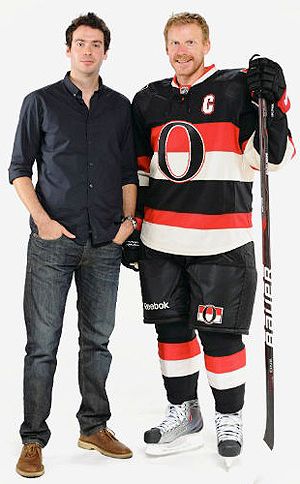
The jersey originated as a concept by a fan, Jacob Barrette, who possessed a combination of graphic design skills and an appreciation for hockey history. Inspired by the Senators new secondary shoulder logos, which were introduced in 2007-08, the new third jersey pays tribute to the sweaters worn by the original Ottawa Silver Seven/Ottawa Senators franchise which played from 1883 to 1933 while wearing their gorgeous red, black and white striped "barberpole" jerseys as they were awarded, won or defended the Stanley Cup 21 times.

Ottawa Senators Jersey Pictures, Images and Photos
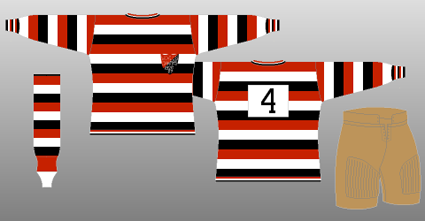
A 1927-28 Ottawa Senators barberpole style jersey

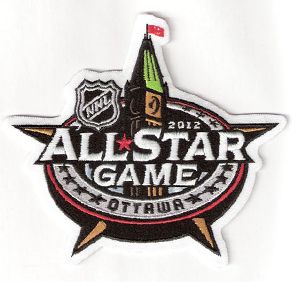
The new alternate jersey is black with red and antique white striping, a lace-up collar and will feature with the 2012 NHL All-Star Game patch. The new jersey is also adorned with shoulder patches inspired by the shield shaped chest patch shown on the above 1927-28 Senators jersey, which was worn to commemorate the Senators 1927 Stanley Cup championship. The patch on the right shoulder of the new jersey is in English, naturally reading "Ottawa Senators", while the one on the left side is in French, a unique twist for the NHL, and reads "Senateurs d'Ottawa".

Senators shoulder patches

In keeping with modern aesthetics, it's not a true barberpole with horizontal stripes covering the full length of the body and sleeves, but a black jersey with a pair of equal width red and antique white stripes across the chest and arms as well as the waist.

Ottawa Senators 11-12 alternate

The names are one color antique white, as are the numbers, which are also trimmed in black and outlined in red, which creates a color-on-color effect when the top half of the numbers overlaps the red striping similar to the Detroit Red Wings 1991-92 Turn Back the Clock jerseys.

Senators heritage numbers

The only feature from the original Senators jerseys not carried over to the new third jerseys are the white squares on the back which contained the numbers, but with modern numbers being quite a lot larger than their distant cousins, the attractive way the numbers intersect the stripes on the back, we have no complaints about the omission in this case.

Senators jersey unveiling
The Senators unveil the jersey to their fans

Today's video section consists of the Senators official videos released in conjunction with the official release of the jersey.

The first video is a photo shoot in advance of the unveiling, including a comments from Senators team captain Daniel Alfredsson and fan/designer Barrette.


The second video shows the club getting dressed in their new jerseys for the first time, amid the sounds of as much velcro ripping as you've ever heard in your entire life.


The third video is a must see, as it shows photos of the original Senators and how their sweaters are the basis for the new heritage uniform. It then goes on to detail Barette's involvement with the project, something quite unusual, if not completely unheard of, for an NHL team to acknowledge and include a fan in the design process. Those involved even travel to the Hockey Hall of Fame to view several original jerseys housed in the hall's collection.


The Senators will wear their new heritage jerseys 12 times this season, including once on the road in Montreal. The dates are as follows;

Thursday, Oct. 13, vs. Colorado
Sunday, Oct. 30, vs. Toronto
Friday, Nov. 4, vs. Montreal
Wednesday, Dec. 14, vs. Boston
Friday, Dec. 16, vs. Pittsburgh
Tuesday, Dec. 27, vs. Montreal
Tuesday, Feb. 7, vs. St. Louis
Saturday, Feb. 11, vs. Edmonton
Friday, March 2, vs. Chicago
Wednesday, March 14, at Montreal
Friday, March 16, vs. Montreal
Saturday, March 17, vs. Toronto

Dasherboard: Also of note in jersey news today, in an effort to raise funds for the families of the players killed in the September 7th plane crash that wiped out the entire roster of the Russian club Lokomotive Yaroslavl, both the Washington Capitals and Pittsburgh Penguins will be wearing jerseys with a commemorative Lokomotive Yaroslavl logo patch.

Lokomotiv patch.jpg

Following the game all the game worn and team issued jerseys will be autographed by the players and then auctioned through October 27th at nhl.com with all the proceeds to benefit the players' children and families.

Russians Alexander Ovechkin and Evgeni Malkin will take part in a ceremonial opening faceoff.

Friday, June 3, 2011

1897 Ottawa Hockey Club Alf Smith Jersey

Born on this date in 1873, Alf Smith was an early hockey pioneer who began his career with the Ottawa Hockey Club of the Amateur Hockey Association of Canada (AHAC) in 1895 at the age of 22. He played three seasons for the club, recording a total of 24 goals in 24 games.

1985 Ottawa Hockey Club
The 1895 Ottawa Hockey Club with rookie Smith
seated on a stool second from the left

During the 1898 season Smith was playing for the Ottawa Capitals in a lower division of the AHAC but was ruled ineligible to compete when it was discovered he had accepted a $100 bonus for playing for the Capitals lacrosse team. The ruling kept Smith off the ice for the next three years but not away from hockey, as he coached the Ottawa Hockey Club to the 1901 Canadian Amateur Hockey League championship.

1901 Ottawa Hockey Club
The 1901 Ottawa Hockey Club with coach Smith
pictured in the bottom left corner

Smith returned to active play as a professional in 1902 as a member of the Pittsburgh Athletic Club of the Western Pennsylvania Hockey League in fine style, scoring 11 times in 14 games.

He returned to his hometown of Ottawa in 1903 and coached the Ottawa Hockey Club, now nicknamed "The Silver Seven" to their first Stanley Cup against the Montreal Victorias with a dominant 9-1 margin in their two-game, total-goals series.

Smith was then reinstated as an amateur for the 1904 season, but also retained his duties as the team's coach while playing right wing. This was the beginning of a run of success for Smith and the legendary Silver Seven, as they retained the Stanley Cup in ten consecutive challenges from March of 1903 to March of 1906, defeating the Rat Portage Thistles (2 games to 1 just days after defeating the Victorias), the Winnipeg Rowing Club (2 games to 1 in January 1904), the Toronto Marlboros (2 games to none in February of 1904) and retained the cup after a challenge by the Montreal Wanderers was abandoned. In a complicated turn of events, the first game of the total goals series was tied at 5-5, but Montreal refused to play overtime! The Wanderers demanded that the game be declared a no-contest and proposed that the series start over as a best of three, but the trustees of the cup decreed that the series continue as scheduled and Montreal refused to travel to Ottawa to continue the series, allowing Ottawa to retain possession of the cup.

Alf Smith Ottawa
The reinstated Smith in the Silver Seven's iconic barberpole sweater

With that bit of ugliness behind them, the Silver Seven defeated Brandon Wheat Cities 2 games to none nine days later in March of 1904. In one of the stories that made the Stanley Cup famous, the Dawson City Nuggets travelled 4,000 miles to Ottawa all the way from the Yukon, including by bicycle, train, steamship and even dogsled as well as having to walk several hundred miles on foot, only to be greeting by the greatest team of the era, who slaughtered the visitors 9-2 followed by a score of 23-2.

Smith and the Silver Seven retained the rights to the cup by winning the 1905 Federal Amateur Hockey League championship and then withstood a challenge from the Rat Portage Thistles 2 games to 1 in March of 1905.

1905 Ottawa Silver Seven Pictures, Images and Photos
The 1905 Ottawa Silver Seven, with player and coach
Alf Smith sitting astride the Stanley Cup

The next to fail to unseat Ottawa was Queen's University, who went down 2 games to none in February of 1906 followed a week later by the Smiths Falls Hockey Club, again 2 games to none.

During the period of the Silver Seven's dominance, Smith scored 34 regular season goals in 22 games as well as 32 goals in 18 playoff contests. Ottawa lost their grip on the Stanley Cup following a second place finish in the Eastern Canada Hockey Amateur Hockey Association's 1907 season although Smith scored 17 times in 9 games.

With his ECAHA season over, the Kenora Thistles attempted to add Smith to their roster for the Stanley Cup series against Brandon Wheat City, but he was excluded by the trustees. For their series against the Montreal Wanderers on March of 1907, Smith was again added to the Thistles roster and again ruled ineligible. However, the series began with Smith playing and the trustee. Mr. Foran, was informed that Montreal had dropped it's protest, which was actually not the case. The trustee then threatened to take the cup back to Ottawa, but the teams played the series anyway, with Montreal winning.

Back with Ottawa, now using their final name of the Senators, for the 1908 season, Smith had a strong campaign, scoring 12 goals in nine games. The next season was an eventful one for Smith as he returned to Pittsburgh to join the Duquesne hockey club of the WPHL only to be suspended after three games for rough play. He next joined the Pittsburgh Bankers, only to suffer the same treatment, again being suspended for rough play after just two games. Clearly not a fit for the WPHL, he returned to Ottawa and joined a Federal Hockey League team he founded also named the Senators.

He also coached the Ottawa Cliffsides to the Allan Cup championship that same season. With his playing days over, Smith then concentrated on his coaching career, which included managing the Renfrew Millionaires, the Ottawa Hockey Club, now known as the Senators and was the first coach of the New York Americans of the NHL in 1926.

In all, Smith played in 107 games over 15 seasons, scoring 135 goals. He was inducted into the Hockey Hall of Fame in 1962.

Today's featured jersey is an 1897 Ottawa Hockey Club Alf Smith jersey. The Ottawa Hockey Club would evolve through a series of white sweaters while they were loosely known as the "Generals", which included this simple white sweater with a plain black "O" with beveled corners. Their sweaters became slightly more elaborate with red sleeves and a rounded red "O" before introducing their iconic red, black and white barberpole jerseys around 1904 when they became known as "The Silver Seven".

Ottawa Hockey Club 1897 sweater

While this is the best photo we can find of Smith wearing this style, here is an illustration of the complete, simple sweater.

Ottawa Hockey Club 1897 illustration

Thursday, March 31, 2011

1919-20 Ottawa Senators Jack Darragh Jersey

At the conclusion of the 1918-19 hockey season, the Montreal Canadiens of the NHL travelled west to face off against the Seattle Metropolitans of the PCHA for the rights to the Stanley Cup Finals. With the series tied at 2-2-1, several members of the Canadiens began to show symptoms of the Spanish Influenza, which caused the remainder of the series to be cancelled and eventually claimed the life of Montreal's Joe Hall.

1919 Stanely Cup engraving
The 1919 Stanely Cup engraving which reads "series not completed"

One year later the NHL champion Ottawa Senators, who won both halves of the regular season to qualify for the finals without the need for the usual playoff. Meanwhile out west, the Metropolitans finished first overall in the PCHA by the slimmest of margins, as Seattle won 12 and lost 10 to narrowly edge the Vancouver Millionaires, who had a final record of 11-11-0, just ahead of the third place Victoria Aristocrats and their 10-12-0 mark.

Seattle still had to face Vancouver in a playoff series to determine the PCHA championship. Vancouver came out strong and won the first game by a 3-0 shutout only to have Seattle return the favor in spades, shutting out the Millionaires by a resounding 6-0 score to claim the series 6 goals to 3.

With their spot in the finals now secured, Seattle began the cross continent trek to the Canadian capital to face off against the Senators, who last drank from the cup back in 1911.

Before the clubs could take to the ice, there was a sartorial issue which needed to be resolved, as both the host Senators and the visiting Metropolitans wore "barberpole" style sweaters which featured colorful horizontal striping, the Senators in black, red and white, while Seattle arrived with their green, red and whites, forcing the Senators to agree to wear white sweaters to avoid any on ice confusion.

Ottawa Senators 1922-23
The Ottawa Senators in their black, red and white sweaters

Seattle Metropolitans 1916-17
The Seattle Metropolitans similar green, red and white sweaters

With their sweater clash now resolved, the Senators captured Game 1 on March 22nd when Jack Darragh scored the game winning goal to give Ottawa a hard fought 3-2 win.

Game 2 on March 24th also went the way of the Senators as goaltender Clint Benedict held the challengers from Seattle off the scoreboard with less than ideal ice conditions creating issues, but not enough to prevent Ottawa from scoring three times for the victory, with Darragh again getting credit for the game winning goal.

Three days later the Metropolitans fought back to make the series 2-1, but with the Senators still holding the advantage.

With milder temperatures in the capital compromising the quality of the ice at The Arena in Ottawa, which did not have the capability of producing artificial ice, officials conferred and a decision was reached to move the series to Arena Gardens in Toronto which was capable of producing it's own ice.

Seattle exploited the faster ice conditions for Game 4 on March 30 to even the series with a 5-2 win to force a deciding Game 5, which was held on this date in 1920. Darragh was the star of the night, as his hat trick, which once again included the game winning goal, powered the Senators to a 6-1 win to clinch the series 3 games to 2, returning the Stanley Cup to Ottawa where it has spent so much time during the century's first decade. Darragh finished the series second on goals scored with five, with three of them being game winning goals.

Ottawa Senators 1920
The 1920 Stanley Cup champion Ottawa Senators

The championship would begin the final era of Senators domination, as they would win the cup following season (191) and again in 1923 and 1927 for the fourth time in seven years before entering a period of financial decline which would see the club relocate to St. Louis by 1934.

Today's featured jersey is a 1919-20 Ottawa Senators Jack Darragh jersey in the familiar Senators barberpole style worn throughout their history.

After much searching, we were unable to locate any photos of the Senators from the 1920 Stanley Cup Finals wearing the white jerseys worn to avoid confusion with the Seattle Metropolitans similarly striped sweaters.

Darragh joined the Senators prior to them even becoming members of the NHL and would play 13 seasons with the club, winning Stanley Cups in 1911, 1920, 1921 and 1923. He had actually retired following their championship in 1921, but returned for after a season away from the team to play two more seasons, which included the championship in 1923. He finished his career with 194 goals in 250 games during his career and was elected to the Hockey Hall of Fame in 1962.

Ottawa Senators 19-20 jersey

Today's video selection documents the early years of the Ottawa Senators and their Stanley Cup success with a focus on the arenas and their locations around Ottawa.


Friday, December 17, 2010

1930-31 Ottawa Senators Alex Connell Jersey

On this date in 1924 goaltenders Jake Forbes of the Hamilton Tigers and Alex Connell of the Ottawa Sentators battled to the first scoreless tie in NHL history, which came in the eighth season of the NHL.

Forbes had begun his NHL career in 1919 with the Toronto St. Pats with five games in his first season. Forbes played in 20 the following year, going 13-7 and when he refused to accept Toronto's contract offer for 1921-22, he was suspended for the the entire season, missing out on the St. Pats Stanley Cup championship, and was later sold to the Hamilton Tigers.

Forbes played three seasons in Hamilton, improving from 6 wins to 9 and finally 19 to lead the league in wins during the Tigers final season. For 1925-26, the Hamilton franchise was purchased by the New York Americans and Forbes played two and a half seasons with the Americans before being loaned to the Providence Reds and later the Niagara Falls Cataracts.

Jake Forbes Americans
Jake Forbes

He would spend the next eight years divided between the Canadian-American Hockey League (with New Haven, Springfield and the Bronx) and the International Hockey League (with Windsor, Syracuse, London and Rochester) with occasional fill in duty with the Americans (9 games over four seasons) and the Philadelphia Quakers for two games in 1930-31.

For the rookie Connell, the scoreless tie against Hamilton was the first shutout of his career. After playing five seasons in the Ottawa City Hockey League, Connell was signed by the Senators of the NHL for the 1924-25 season. He would appear in 30 games his first season and post seven shutouts in all. The following season of 1925-26, Connell won 24 games in 36 stars, with 15 shutouts, a career high. In 1926-27, Connell won 30 games, 13 by shutout, in 44 appearances. The Senators would defeat the Montreal Canadiens and then defeat the Boston Bruins in their best-of-five series by the unusual line of 2 wins, no losses and a pair of ties earning Connell his first Stanley Cup.

Alex Connell Senators
Ottawa Senator Alex Connell

During the 1927-28 season, Connell set the NHL record for the longest shutout streak of 461:29 by recording six consecutive shutouts. The streak began on January 28th when he held the Montreal Canadiens to single goal in a 2-1 Senators win. The Toronto Maple Leafs then fell 4-0 to Connell and the Senators, who then prevailed 1-0 in overtime over the Montreal Maroons. The New York Rangers battled the Senators to a pair of scoreless ties on February 7th and 9th and the Senators offense again failed to support Connell on the 16th when they tied the Pittsburgh Pirates 0-0. The Canadiens failed to solve Connell while the Senators managed to find the net for the first time in four games to secure a 1-0 win. The streak ended when during Ottawa's 3-2 win over the Chicago Black Hawks on February 22nd. During the final five games of the six consecutive shutouts, the Senators only managed two goals themselves. Connell would finish the season by matching his career high of 15 shutouts.

At least he thought his season was finished. While watching Game 2 of the Stanley Cup Finals between the Maroons and the Rangers, Lorne Chabot of New York was injured and Rangers coach Lester Patrick wanted Connell to come out of the stands to replace Chabot. The Maroons coach Eddie Gerard refused to grant permission for Connell to play, forcing Patrick to famously man the crease himself.

Connell played three more seasons with the Senators prior to being loaned to the Detroit Falcons for the 1931-32 season, as the Senators franchise did not play that season due to financial difficulties. Connell rejoined the Senators for 1932-33 and was named team captain, but would only see action in 15 games compared to the 48 he played for the Falcons the previous season and he retired for the first time at the end of the year.

Alex Connell Falcons
Alex Connell during his one season with the Detroit Falcons

In 1933-34, the "retired" Connell did see action in a single game when he was loaned to the New York Americans as an injury replacement. He was given a new life for 1934-35 when he was traded to the Maroons and played in 48 games, winning 24, the second highest total of his career. The Maroons then defeated the Chicago Black Hawks one goal to none in their two-game, total-goal quarterfinal series. The Rangers then fell five goals to four to advance the Maroons to the Stanley Cup Finals. Connell and the Maroons then swept the Maple Leafs in three straight games to win the second Stanley Cup of Connell's career.

Alex Connell Maroons
Stanley Cup champion Alex Connell of the Montreal Maroons

He retired again following the Maroons championship season and was out of hockey for a year but returned to the ice once again to play the 1936-37 season with the Maroons before finally retiring for good this time.

His final totals were 417 games played with a record of 193-156-67 with 81 shutouts and an impressive career goals against average of just 1.91.

Connell was elected to the Hockey Hall of Fame in 1958.

Today's featured jersey is a 1930-31 Ottawa Senators Alex Connell jersey. The Senators familiar barberpole style jerseys underwent a change in in 1929 with the addition of the "O" crest for the first time. The next season the shoulder yoke would be white for just the one season before the struggling Senators sat out the 1931-32 season. When they returned to the NHL, they reverted to the previous style where the stripes repeated all the way to the top of the jerseys for their final two seasons in Ottawa before relocating to St. Louis in 1934-35.

Alex Connell Senators

Thursday, November 18, 2010

1910-11 Ottawa Senators Percy LeSueur Jersey

Goaltender Percy LeSueur was born in Quebec City, Quebec on this day in 1881. He was a member of the 1903-04 Smith Falls Seniors of the Ontario Hockey Association, where the right winger converted to goaltender, going 3-3 in six games played, and stayed with the club the following season when they moved to the Federal Amateur Hockey League. Smiths Falls won the league title by going a perfect 7-0 with LeSueur winning all seven games while posting a 1.9 goals against average, far ahead of the next best goalkeeper's 4.5 average.

'Smiths

Smiths Falls, encouraged by their strong performance in the FAHL, challenged the current Stanley Cup holders, the Ottawa Senators. Ottawa won the first game of their best-of-three series 6-5 on March 6, 1906 and successfully defended their rights to the cup two days later with an 8-2 win. Despite the 14 goals scored against Smiths Falls in the two games, the Senators were so impressed by LeSueur that they obtained his rights and he made his Senators debut just nine days later.

At the time the Senators were involved in another playoff series for the championship of the Eastern Canada Amateur Hockey Association against the Montreal Wanderers, with whom they had tied for the league lead with matching 9-1 records, with the league champion also earning possession of the Stanley Cup. Following Montreal's dominant 9-1 win in the first game of the two-game total-goals series, LeSueur was installed in the Senators goal. Anticipation for the game was high, attracting a crowd of over 5,400 people, which resulted in all manner of changes to the Dey's Arena seating to accommodate the throng, some of which paid five times face value for a ticket to the match, a lofty $10!

Facing an enormous task being down by eight goals, the Senators made things harder for themselves by giving up the first goal of the game, raising their deficit to nine. The Senators responded by scoring three goals prior to halftime, and Ottawa then stormed out in the second half, piling up six straight goals to even the series at ten goals apiece! Montreal's Lester Patrick would dash the Senators dream of a comeback by scoring with a minute and a half to play and clinch the title with another with seconds left on the clock, ending the Silver Seven's three year reign as holders of the Stanley Cup, which included nine straight successful defenses.

The Toronto Globe would call the game the "greatest game of hockey ever played on Canadian ice, or any other", while The Sporting News labeled it the "Greatest Hockey Game in History".

In his first two full seasons of 1906-07 and 1907-08 with Ottawa, LeSueur posted identical 7-3 records before he lead Ottawa to the league title in 1908-09 when he went 10-2. By winning the league championship, Ottawa regained their role as holders of the Stanley Cup for the first time since losing control of the cup in LeSueur's memorable first game as a Senator in 1906.

During this time period, he was also chosen to play goal in the Hod Stuart Memorial Game, the first All-Star game in hockey history on January 2, 1908.

'PercyLesueur1910
LeSueur modeling a gorgeous Senators team sweater on this 1910 C56 hockey card

The next season was one of turmoil for Ottawa off the ice, as they joined the ill-fated Canadian Hockey Association for a few weeks prior to moving over to the National Hockey Association. During the season, the Senators successfully defended two separate challenges to their rights to the Stanley Cup, with LeSueur winning all four games, two against Galt and two against Edmonton. Back in the NHA, at the end of the season Ottawa had finished second in the seven team league, forcing them to relinquish the cup to the Wanderers once more.

Ottawa regained the cup following the 1910-11 season in which LeSueur went 13-3 and then withstood two single game challenges from Galt (7-4) and the Port Arthur Bearcats (13-4), giving LeSueur a six game winning streak in Stanley Cup challenge games.

1911 Ottawa Senators Pictures, Images and Photos
1910-11 Ottawa Senators - holders of the Stanley Cup
LeSueur is in the center of the photo holding his goalie stick and wearing the leg pads

LeSueur would spend three more seasons with the Senators before being traded to the Toronto Shamrocks for the 1914-15 season and transferred to the Toronto Blueshirts for the final season of his playing days.

LeSueur was an innovator, being credited for the design of the hockey net used on the ice from 1912 to 1925 and the "gauntlet" style goaltending glove. He later coached the Hamilton Tigers of the NHL in 1923-24 and was a member of the broadcast team of Hockey Night in Canada during it's early days while still on the radio. He was also a member of the ownership group which won the rights to an NHL franchise for the city of Detroit, originally named the Cougars, who coincidentally played their first game also on this date in 1926.

LeSueur was inducted into the Hockey Hall of Fame in 1961.

Today's featured jersey is a 1910-11 Ottawa Senators Percy LeSueur jersey with the Senators trademark black, red and white horizontal "barberpole" stripes. This style of jersey was first adopted in 1904, and except for one season with vertical stripes in 1910-11, remained in use through the original Senators final season in Ottawa of 1933-34, with the addition of the letter "O" crest from 1929-30 on.

'Percy


Saturday, October 16, 2010

1909-10 Ottawa Senators Marty Walsh Jersey

Born on this date in 1883, played in the Canadian Intercollegiate Hockey Union for Queen's University from 1902 through 1906, including a league championship in 1906 which led to a challenge for the Stanley Cup in which he scored four goals in two games versus the Ottawa Silver Seven.

Walsh turned professional in 1906-07 when he played for the Canadian Soo of the International Hockey League. Unfortunately, his season was limited to seven of 24 games due to a broken leg, but he gave a glimpse of his potential with four goals and five assists for nine points in limited action.

For the 1907-08 season Walsh moved back east to join the mighty Silver Seven, who had defended the Stanley Cup 11 times from March 1903 to March 1906. In his first season with Ottawa, Walsh made his presence known with 27 goals in nine games, including seven in one game against Montreal on March 7, 1908, to lead the league in scoring.

The following season Walsh again led the league in scoring with an astounding 42 goals in just 12 games, an average of 3 1/2 goals a game! The club, now known as the Senators, demolished the competition with a 10-2 mark while scoring 117 goals in their 12 games, quite nearly a ten goal per game average and no game with less than five. As Eastern Canada Hockey Association champions, the Senators became holders of the Stanley Cup.

As was often the case in the formative years of professional hockey, a dispute within the ECHA led to the Senators joining a brand new league for 1909-10, the Canadian Hockey Association. The league was a failure and Ottawa ended up playing just three league games as well as a pair of defenses of the Stanley Cup. Walsh scored nine goals in the two Senators CHA games he played and then six in the first game of the Senators defense of the cup against Galt.

When the CHA disbanded, Ottawa then became a member of the National Hockey Association for their schedule of games that season. Walsh came fourth in league scoring with 23 goals in 11 games as well as adding a pair of goals in a successful defense of the Stanley Cup against Edmonton of the Alberta Amateur Hockey Association. All told, Walsh scored 40 goals in 17 games that season but Ottawa had to relinquish the Stanley Cup to the NHA champion Montreal Wanderers.

Walsh had another stellar season in 1910-11 with 35 goals in 16 NHA contests to lead the league in scoring as the Senators won the league championship to regain possession of the Stanley Cup once more.

1911 Ottawa Senators
1911 Ottawa Senators - holders of the Stanley Cup

On March 13th, Galt once more challenged for the Stanley Cup and Walsh led the defense with three of the seven Ottawa goals to win 7-4.

Three days later Port Arthur had the misfortune to face an on-form Walsh, who scored ten goals in a 13-4 win for the Senators.

In his final season of 1911-12, Walsh scored 9 times in 12 games to close out his carer. Following his playing days, Walsh moved to Edmonton and fell ill, passing away just two years later.

He was inducted into the Hockey Hall of Fame in 1962.

Today's featured jersey is a 1909-10 Ottawa Senators Marty Walsh jersey. This unusual style features a departure from the signature Ottawa horizontal barberpole stripes, with the trademark red, black and white stripes running vertically before a return to the classic horizontal orientation for the remainder of the club's existence until 1934.

Marty Walsh Ottawa 1910-11


Tuesday, June 29, 2010

1992-93 Ottawa Senators Peter Sidorkiewicz Jersey

Born on this date in 1963 in Dabrowa Bialostocka in northeast Poland, Peter Sidorkiewicz came to Canada with his family and settled in Oshawa, where he played his junior hockey for four years, including a trip to the Memorial Cup Final in 1983.

He was drafted by the Washington Capitals in the 1981 NHL Entry Draft, but before he could play for the Capitals, his rights were traded to the Hartford Whalers. After three seasons in the AHL playing for the Binghamton Whalers, including a 31-9-5 record in 1984-85, he made his NHL debut with a single appearance in the 1987-88 season on October 16, 1987. According to our research, Sidorkiewicz became just the third player in NHL history born in Poland after John Miszuk (1964) and Nick Harbaruk (1970) and preceding Mariusz Czerkawski (1994) Krzysztof Oliwa (1997) and Wojtek Wolski (2006).

He made the Whalers lineup the following season, playing in 44 games as he shared time with Mike Liut, posting a 22-18-4 mark with four shutouts, which earned him a spot on the 1989 NHL All-Rookie Team. After the Whalers were ousted from the playoffs, Sidorkiewicz joined Team Canada at the 1989 World Championships in time to appear in one game, the only international experience of his career.

His playing time increased over the next two seasons as he became the Whalers clear #1 goalie and guided Hartford into the playoffs both seasons.

Peter Sidorkiewicz Whalers
Sidorkiewicz with Hartford in 1991-92

After seeing his playing time reduced from 52 games to 35 in the 1991-92 season, Sidorkiewicz was left unprotected in the 1992 NHL Expansion Draft, where he was claimed by the Ottawa Senators for their debut season.

Life with the expansion Senators was a mixed blessing for Sidorkiewicz, as he was once more the clear number one goalie for the Ottawa, seeing plenty of action in 64 games, a career high at for him any level of hockey. On the other hand, the woeful Senators finished dead last in goals scored with 202, 167 less than the Detroit Red Wings. Their porous defense allowed the other teams too many chances on goal, and while Sidorkiewicz played well enough to be named the Senators representative at the 1993 NHL All-Star Game, the Senators finished the season with only ten wins to their credit, of which Sidorkiewicz had eight.

As the Senators were looking to build their roster, Sidorkiewicz was viewed as one of their few tradable assets and was sent to the New Jersey Devils a year and two days after being claimed by the Senators.

The move all but ended Sidorkiewicz's NHL career, as the Devils already had the goaltending tandem of Martin Brodeur and Chris Terreri. As a result, Sidorkiewicz spent the majority of the 1993-94 season with the Albany River Rats in the AHL and the Fort Wayne Komets of the IHL, including a run of 18 playoff games as the Komets went all the way to the Turner Cup Finals. He did make three appearances for New Jersey, but despite only giving up six goals, did not help his case with three losses on his record.

Back with Fort Wayne for the 1994-95 season, he fought for playing time in the crowded Comets crease, playing in just 16 games, third among the five goalies used by Fort Wayne that season.

Things improved the next season when he returned to Albany and played 32 games in conjunction with the up-and-coming Mike Dunham. With Dunham now up in New Jersey as Brodeur's understudy, Sidorkiewicz got the bulk of the playing time in 1996-97, going 31-23-6 in 62 games as well as starting in 16 playoff games.

Sidorkiewicz final season saw him again split time in goal for Albany, going 21-15-5 as well as making one final NHL appearance with New Jersey in 1997-98, giving up one goal in 20 minutes of action. It was only his fourth game with the Devils in the five seasons after his trade away from being the starter in Ottawa.

Peter Sidorkiewicz Devils
Sidorkiewicz in a rare appearance for the Devils

Today's featured jersey is a 1992-93 Ottawa Senators Peter Sidorkiewicz jersey. The Senators debut season saw them wearing the Stanley Cup Centennial patch, which was worn by all the teams that season.

The Senators original black jerseys had black on the arms in between the red stripes and red numbers with white trim. Additionally, they had a red waist stripe over a somewhat thinner black stripe. On the back, the numbers were red with white outlines. This specification remained in effect for only one season, as they reversed the colors of the numbers for their second season, changing them to a more legible white with red trim, which lasted until the end of the 1994-95 season.

Peter Sidorkiewicz Senators

While Sidorkiewicz isn't in this video, we won't let that stop us from posting a history of Senators goalie fights, especially since Sidorkiewicz doesn't seem to appear in any video online anywhere.