Showing posts with label Gretzky. Show all posts

Saturday, January 29, 2011

1999 NHL All-Star Game Wayne Gretzky Jersey

Among his dozens of NHL scoring records, Wayne Gretzky holds five NHL All-Star Game scoring records, the Most Points in One Period, the Most Goals in One Period, the Most Goals in One Game, the Most Goals in All-Star Game History and the Most Points in All-Star Game History.

His first All-Star appearance was in the World Hockey Association in 1979 when he got to play with his childhood idol Gordie Howe and his son Mark. The event was not a single game dividing stars of the WHA into two teams pitted against each other in the usual All-Star Game format, but a three game series between the WHA All-Stars and Dynamo Moscow of the Soviet Union. During the three games the line scored seven points in the 4-2 win for the WHA. Gretzky scored a goal in the WHA's second consecutive 4-2 win before being held scoreless in the final game in which the WHA completed a three game sweep 4-3.

Gretzky's first NHL All-Star appearance came in the following season in Detroit in 1980. His first All-Star point arrived in 1981 with an assist in the third period when Doug Wilson scored at 10:18 of the third period on assists from Mike Bossy and Gretzky.

NHL All Star G 80 & 81 FaaNHL All Star G 80 & 81 B
Wayne Gretzky wore this style of jersey in both 1980 and 1981

The first of his record 13 All-Star Game goals came in 1982 in Landover, Maryland just 26 seconds into the second period from Paul Coffey and Dino Ciccarelli.

1982 NHL All Star Gameaa1982 NHL All Star Game
Gretzky's star-spangled 1982 All-Star jersey

His first multi-point and multi-goal game came in 1983 at the Nassau Coliseum when he set All-Star Game records for Most Points, Most Goals in One Period and Most Goals in a Single Game when he erupted for four goals in the third period against Pelle Lindbergh.

His first goal was the game winning goal for the Campbell Conference at 6:20 from Jari Kurri and Coffey. His second came from Mark Messier and Kurri at 10:31. He completed a hat trick at 15:32 from Wilson and Messier. The Campbell Conference continued to pour it on and Gretzky completed his record setting scoring binge with the Campbell's sixth goal of the period and Gretzky's fourth from Messier at 19:18. Four other players have since tied the record for most goals in a game, but Gretzky was the first in league history to accomplish the feat, and only needed one period to do so! Two other players equalled Gretzky's four points in one period, but he still stands alone for the most goals in one period 28 years later. Not surprisingly, Gretzky earned the first of his All-Star Game MVP awards following the game.

In 1984, he added a goal to his career total in New Jersey. Another goal followed in 1985 in Calgary and again in 1986 in Hartford, with all three also coming in the third period of their respective games.

1984 & 1986 NHL All Star Game jerseyaa1984 & 1986 NHL All Star Game jersey
This highly attractive style was worn by Gretzky in both 1984 and 1986

1988 saw his goal scoring streak reach five consecutive games, but for a change of pace it arrived earlier in the game during first period.

Gretkzy made his first All-Star appearance in Edmonton in 1989, only now as a member of the Los Angeles Kings. He put on a show for the Oilers faithful who were again able to cheer for Gretzky as a member of the "home" Campbell Conference squad.

The scoring began with an assist on Kurri's goal 1:07 into the contest. His goal scoring streak continued at 4:33 from Steve Duchesne. Another assist arrived at 12:18 of the third period en route to the Campbell Conference's 9-5 win. Following the game, Gretzky was named the recipient of his second All-Star Game MVP award.

1989 NHL All Star Game jerseyaa1989 NHL All Star Game jersey
This sharp looking style debuted in 1989 and lasted through 1993

The unimaginable happened in 1990 in Pittsburgh when Gretzky was held scoreless, ending a nine game All-Star Game scoring streak. He returned to the scoring column in 1991 in Chicago with his 11th career goal in the second period in the Campbell Conference's 11-5 win to surpass Howe's career NHL All-Star Game goal scoring record of 10.

NHL All Star G 89-90 FaaNHL All Star G 89-90 B
NHL All Star G 90-91 FaaNHL All Star G 90-91 B
Gretzky wore the road black version in 1990 and went back to the home white in 1991

The NHL celebrated it's 75th Anniversary season by wearing throwback jerseys to the original All-Star game in 1947 in Philadelphia. Gretzky Scored a goal in the first period and collected a pair of assists in the second for a three point game.

NHL All Star G 91-92 FaaNHL All Star G 91-92 B
This striking 1947 throwback was worn in Philadelphia in 1992

Gretzky was again held off the board in Montreal in 1993 and again bounced back in New York's Madison Square Garden in 1994 with two assists.

1993 NHL All Star Game jerseyaa1993 NHL All Star Game jersey
The final time out for this style was adorned with the Stanley Cup Centennial patch in 1993

There was no All-Star Game in 1995 due to the labor issues which delayed the start of the season until after the new year. Gretzky did not register a point in a relatively low scoring game in Boston in 1996 and a single assist in San Jose in 1997 moved Gretzky into sole possession of the All-Star Game career scoring record with 20 points, once again passing a record held by Howe. The switch to the Eastern Conference in 1996-97 gave Gretzky an opportunity to play with several new teammates not previously possible, especially a reunion with former Canada Cup teammate Mario Lemieux, whose goal he assisted on during what would be their only All-Star game on the same team.

1996 NHL All Star Game jerseyaa1996 NHL All Star Game jersey
NHL All Star G 96-97 FaaNHL All Star G 96-97 B
This creative new template debuted in 1994, but hasn't aged well over time due to the trendy color choices of purple and teal

A change in format to North America vs. The World in 1998 scrambled his teammates once more, yet Gretzky found the chemistry to generate another pair of assists with American John LeClair and long time Oilers teammate Mark Messier on the North American's game winning goal.

NHL All Star G 97-98 FaaNHL All Star G 97-98 B
Another strong design arrived in 1998 for the World vs. North America format

Gretzky's final All-Star Game in Tampa, Florida was an unqualified success and a great way to cap off a record setting All-Star career for The Great One when he had an assist in the first period, pushed the career goal scoring record to 13 in the second period and later added a final assist to push his career point scoring record to 25, which still stands today. The final cherry on top was Gretzky being named the game's MVP, the third such occasion of his career, which allowed him to tie Lemieux for the most in All-Star Game history.

Today's featured jersey is a 1999 NHL All-Star Game Wayne Gretzky jersey. This sharp jersey template was worn by Gretzky for his final two All-Star Games and was loaded with patches. All of the jerseys used in the game had the 1999 All-Star Game logo on the right shoulder, the logo of the player's club team on the left shoulder and the flag from his country of origin on the upper right chest. Additionally, Gretzky's jersey was adorned with the captain's "C" on the upper left chest to complete the look.

NHL All Star G 98-99 F
NHL All Star G 98-99 B
NHL All Star G 98-99 P2aaNHL All Star G 98-99 P3aaNHL All Star G 98-99 P1

Today's video segment begins with Gretzky's interview after his record setting four goals in one period in 1983.


Here is Gretzky's assist on Lemieux's goal in the 1997 edition of the NHL All-Star Game, the only time the two of them would play together in an All-Star Game.


Finally, highlights of Gretzky's MVP performance in his final All-Star Game in 1999 broadcast in some Eastern European language, which we feel speaks to Gretzky's worldwide appeal.


Thursday, January 27, 2011

1987 NHL All-Star Wayne Gretzky Jersey

While the NHL All-Star Game has been almost exclusively a competition between players of the NHL, there have been two occasions when the usual format was bypassed in favor of an international competition against the Soviet Union.

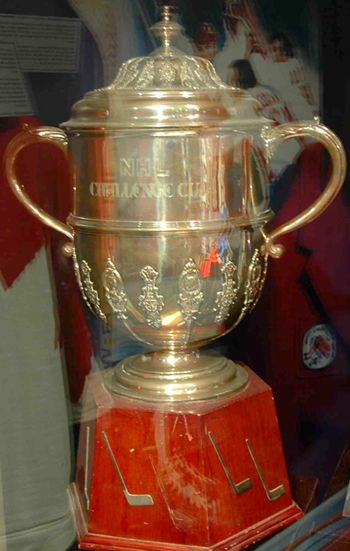
The first such occasion occurred in 1979 with an event called the 1979 Challenge Cup. Up to this point, the Soviets had played against North American professionals three times, the first being the ground breaking 1972 Summit Series against a team of Canadians from the NHL. The 1974 Summit Series revisited the concept, only this time against a team of the best players from the WHA. The first Canada Cup tournament took place in 1976, which had not only Team Canada and the Soviet National Team, but also teams from Sweden, Czechoslovakia, the United States and Finland.

The Challenge Cup was held in New York's Madison Square Garden and took the place of that season's traditional All-Star Game and consisted of a three game series held on February 8, 10 and 11, 1979.

Challenge Cup program
1979 Challenge Cup program cover

The NHL All-Star team was made up of NHL players, regardless of the country they were born in. In all, the NHL All-Stars comprised 23 Canadians and three Swedes.

Guy Lafleur opened the scoring in Game 1 just 16 seconds into the game, but by now the North Americans had learned not to dismiss the Soviets, a lesson learned in Game 1 of the 1972 Summit Series. Each team scored a power play goal before the first period ended with the NHLers up by one.

The NHL extended it's lead in the second period with goals from Clark Gillies and Bob Gainey. Vladimir Golikov pulled one back for the Soviet Union 3:02 into the third, but the All-Stars circled the wagons and held off the Soviets the rest of the way to win 4-2 with Ken Dryden getting the win in goal for the NHL.

Challenge Cup pennant

Game 2 had the Soviet Union scoring first at 8:10 only to have the NHL score three consecutive goals , a power play from Mike Bossy and an even-strength goal from Bryan Trottier in the first followed by a Gilbert Perrault tally just 27 seconds into the second.

The Soviets fought back with a goal at 2:05 before Larry Robinson restored the All-Stars lead to two again at 5:06. That lead quickly disappeared when the Soviet Union scored at 17:02 on the power play and again 45 second later to even the game heading into the third.

Golikov got one past Dryden at 1:31 for the game winner, as the rest of the period was scoreless as Vladislav Tretiak held the All-Stars at bay to even the series at one game apiece.

Challenge Cup ticket

Game 3 was simply all the Soviet Union as they put on a dazzling display of complete hockey. There was no score after the first period before the Soviets scored at 5:47 and again at 7:44 on a power play. The third period was all Soviet Union as they solved goalie Gerry Cheevers again and again, scoring four times during a six minute span beginning at 8:44 to win the series 2 games to 1 with Vladimir Myshkin getting the shutout in his surprise debut for the Soviets.

1979 Challenge Cup team

While many people my not remember the Challenge Cup games, the cup itself is a spectacular trophy perhaps best remembered when the Soviet team returned to Madison Square Garden exactly one year later on February 9, 1980 and paraded the Challenge Cup around the ice prior to their 10-3 demolition of the United States Olympic Hockey Team in a tune-up match for the impending 1980 Olympics.

1979 Challenge Cup parade

This game occurred just 13 days before the Soviets shocking defeat in the "Miracle on Ice", when essentially the same Soviet team that easily dominated the best of the NHL 6-0 in Game 3 of the Challenge Cup lost to a team of American college players during the Olympics.

Similar to the Canada Cup trophy, the Soviets were allowed to win the trophy, but were not allowed to actually keep the trophy, which now resides in the Hockey Hall of Fame in Toronto.

Challenge Cup display

The jerseys worn by the NHL All-Star Team for the 1979 Challenge Cup were without a doubt the simplest, most plain ones ever worn by an NHL All-Star Team, and actually managed to make the Soviet jerseys almost look flashy by comparison!

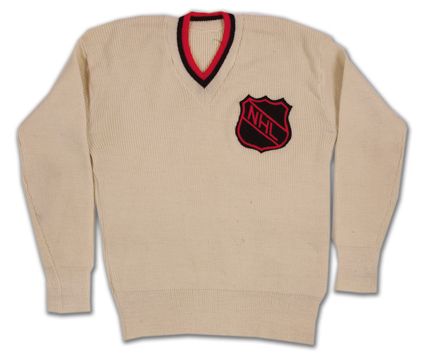
Without so much as a single star on them, the closest thing these jerseys can be compared to are the NHL referee's sweaters worn in the 1940's only with the addition of a pair of stripes and bolder numbers.

NHL All Star 78-79 F
NHL All Star 78-79 B

The Soviet Union jerseys were their usual utilitarian selves, simply adorned with CCCP in a simple font with legible numbers and some basic striping as adornment, but with the addition of the repeating diamond pattern around the waist for a touch of flair not seen on the jerseys of the NHL All-Stars.

These Soviet jerseys would be the now familiar style as worn in the 1980 Olympic Games in Lake Placid, New York.

Soviet Union 1980 F
Soviet Union 1980 B

The next instance where the normal All-Star Game was put aside for a year came eight years later with Rendez-vous '87, which was similar in format to the 1979 Challenge Cup, where the Soviet National Team faced off against a team of NHL All-Stars, except in a two game format, rather than three as in 1979.

rendez-vous-87 program
Rendez-vous '87 program cover

Why the teams did not compete for the rights to the impressive Challenge Cup once again, we do not quite understand, but the hockey competition was just a part of the annual Quebec Winter Carnival which was a multi-cultural event that year featuring entertainers and food from Canada, Russia and the United States.

The games were held in Quebec City, Quebec at Le Colisee, home of the Quebec Nordiques.

The Soviet lineup was a strong one, and featured over a dozen players who would eventually compete in the NHL within the next six years. The changing face of the NHL was reflected by the increasing international presence on it's roster, now sporting players from not only Canada and Sweden as before, but with the addition of players from the United States and Finland as well.

Game 1 took place on February 11, 1987 and Jari Kurri got the NHL All-Stars off to a 1-0 lead 5:23 in to the game. The Soviets fell behind 2-0 when Glenn Anderson scored with three minutes remaining in the second period but managed to get on the board before the period ended when Alexei Kasatonov got one by Grant Fuhr with 1:18 remaining.

rendez-vous-87action 1

The third period was an exciting affair, as the Soviets tied the game 2:03 into the period. Canada retook the lead five minutes later with Kevin Dineen's goal only to have the Soviets tie the game once more one minute later thanks to Anatoli Semenov.

The game continued scoreless as time began to wind down before Dave Poulin got the game winning goal for the All-Stars with just a minute and fifteen seconds left when he beat goaltender Evgeny Belosheikin, who had the audacity to wear Tretiak's legendary #20!

After a day of rest, the teams returned to the ice on February 13, 1987 following much the same script, as the NHL again scored 3:32 into the game to lead 1-0 after the first period.

rendez-vous-87action 2

The Soviet Union got two goals early in period two when Valeri Kamensky and Vladimir Krutov scored a minute and a half apart for their first lead of the competition. Doug Wilson evened the scoring at 2-2 with his goal on the power play at 7:33 only to have Kamensky and Krutov each score their second goals of the game to put the Soviets ahead by two. Kamensky's second goal came with 19 seconds left in the second period, while Krutov's game winner came 9:19 into the third period.

Krutov Rendez-vous '87 Pictures, Images and Photos
Krutov's two goals were key to the Soviet in in Game 2

Andrei Khomutov increased the Soviet lead to 5-2 at 12:59, which proved to be an important goal in not only the game, but in the larger picture of the series as a whole, for when Ray Bourque scored at 19:23 of the third period, it was too little too late as the Soviets not only won the game 5-3, but earned bragging rights for the series by outscoring the NHL All-Stars by a combined 8-7 over the two games thank's to Khomutov's goal.

Following the game, team captains Wayne Gretzky and Vladislav Fetisov traded jerseys in keeping with the tradition of European soccer players, leading to the most unusual sight of Wayne Gretzky wearing a Soviet National Team jersey emblazoned with CCCP across the front as well as a Cyrillic captain's "K".

Gretzky & Fetisov jersey swap
"Comrade" Gretzky in his Soviet National Team jersey

Despite the loss in the series, the two games together allowed the Canadian members of the NHL All-Star Team a chance to compete together in advance of that fall's thrilling 1987 Canada Cup.

Today's featured jersey is a 1987 NHL All-Star Team Wayne Gretzky jersey as worn in the two game Rendez-vouz '87. This jersey's unusual customization had sleeve numbers only on the left arm, as the Rendez-Vouz '87 patch was placed on the right sleeve in the location usually occupied by the numbers due to the stars on the chest occupying the usual location for such a patch on the upper right chest.

This style of jersey was worn only for the two games of the series in Quebec City and there was no dark "road" version ever produced, as was the norm with NHL All-Star jerseys since the introduction of the East vs. West format in 1969.

Examples of this style jersey for collectors are rather scarce, as retail jersey sales were still in their infancy in 1987.

1987 NHL All-Star Rendez-vous '87 jersey

Bonus Jersey: Today's Bonus jersey is a 1987 Soviet National Team Sergei Priakin jersey as worn during Rendez-vous '87. These jerseys were some of the less successful of the Soviet Union's, as the dark red stripes on the red body of the jersey were too close in color to create any worthwhile contrast.

Gone were the striking diamond pattern on the waist of the 1979 Challenge Cup jerseys, as well as the more pleasing font for the numbers. Things would improve in the years following, as the jerseys worn in international hockey would soon be made by the Finnish brand Tackla, giving the final jerseys of the Soviet era some much needed graphic design.

Priakin would become the answer to a trivia question in 1988 when he became the first Soviet player to be allowed to compete in the NHL, which he did with the Calgary Flames. He would also suffer the common plight of the Soviet players during this early era of playing in North America, as the spelling of their names on the backs of their jerseys often varied from appearance to appearance. As seen here, "PRYAKHIN" would latter play for the Flames wearing "PRIAKIN".

1987 Soviet Union Rendez-vous '87 F

Today's video highlights begin with all the goals scored in the 1979 Challenge Cup.

Game 1, won by the NHL All-Stars.


Game 2, the Soviets come from behind to win the game and turn the tide of the series.


The Soviet Union's dominant performance in Game 3.


Next, Poulin tips in the game winning goal in Game 1 of Rendez-vous '87.


In Game 2 of Rendez-vous '87, Kamensky is a one man highlight reel, scoring two and assisting on Khomutov's goal for good measure.


Sunday, December 19, 2010

Weekend Update

From The Onion, America's Finest News Source:

A look at the pros and cons of Wayne Gretzky

Gretzky Strong Side Weak Side

Wednesday, December 1, 2010

1996-97 New York Rangers Wayne Gretzky Jersey

On this date in 1996 Wayne Gretzky became the first player in NHL history to reach the 3,000 point mark, including the regular season and playoffs combined.

Wayne Gretzky started out in the WHA with the Indianapolis Racers, scoring six points in eight games before being dealt to the Edmonton Oilers for the remainder of the season in which he scored another 104 points in 72 games with Edmonton. That year he added another 20 points in 13 playoff games for a grand total of 130 points.

Following that season the Oilers, along with three other surviving WHA teams joined the NHL, where Gretzky would play the remainder of his record shattering career.

He announced his 1979-80 arrival in the NHL by tying Marcel Dionne for the league lead in points with 137, losing out on the Art Ross Trophy on the first tiebreaker - goals scored, as Dionne had 53 goals to Gretzky's 51. The playoffs would see an additional 3 points in 3 games.

Making certain there was not going to be any tiebreakers the following season, Gretzky would win the title with 164 points, 29 more than Dionne, and set the all-time single season mark, eclipsing Phil Esposito's 152 set in 1971, for the first of his seven consecutive scoring titles. 21 playoff points would follow.

Gretzky would lay waste to the opposition in 1981-82 by leading the league in both goals and assists, with an all-time NHL record total of 92 goals, scoring 65 points more than Mike Bossy, for a total of 212, the first player to ever top 200 points in a single season and beating his own year old single season record by 48 points. He would add 12 points in the playoffs in 5 games.

1982-83 would see a reprise of the previous season, with Gretzky topping the charts in both goals and assists, finishing the season with 196 regular season points, beating Peter Stastny by an incredible 72 points. 16 playoff games would see an amazing 38 more points.

A return to the 200 point stratosphere followed in 1983-84 with 205 points and the most goals and assists once more as he outdistanced teammate and defenseman Paul Coffey by an astounding 79 points. 35 more points would follow in the playoffs as Gretzky and the Oilers would capture their first of four Stanley Cups.

Business as usual in 1984-85 saw another 208 point run to Gretzky's fifth consecutive Art Ross Trophy, leading the NHL once more in both goals and assists, this time 73 points up on another Oiler teammate, this time Jari Kurri. He would set the single season record for most points in the playoffs with 47 points in just 18 games on the way to another Stanley Cup.

Gretzky would raise the single season scoring mark in 1985-86 by topping his own mark with 215 on the strength of 163 assists, setting an all-time record in that category. Gretzky would finally relinquish the goal scoring title that season, coming in sixth with 52, 16 behind Kurri, who obviously benefitted from Gretzky's record number of assists. Even teammate Glenn Anderson had more goals than Gretzky with 54. An early exit from the playoffs would see an additional 19 points in 10 games.

Despite a "dip" in production, 1986-87 would conclude with his seventh scoring championship, as Gretzky would lead the league in both goals and assists once again. His 183 points were 75 more than Kurri, but would break his run of 200 point seasons at three. A return to the Stanley Cup title saw another 34 points.

Only playing in 64 games would force Gretzky to finally relinquish his scoring crown, as his 149 points left him 19 back of Mario Lemieux despite leading the league in assists for the ninth consecutive season. The final Stanley Cup of Gretzky's career saw him in peak form with 43 points in 19 games.

1988-89 saw a return to the 50 goal level and his 114 assists would tie him for the league lead with Lemieux as he racked up another 168 points, placing second to Lemieux overall during Gretzky's first season in Los Angeles. 11 playoff games saw the opportunity to add 22 more points.

He would reclaim the Art Ross Trophy in 1989-90 with 142 points and yet another league leading assist total, this time with a mere 13 points over former Oiler teammate Mark Messier. 7 playoff games for the Kings had Gretzky add 10 points.

His 163 points in 1990-91 gave him 32 more than Brett Hull to once more win the scoring title, despite finishing outside the top ten in goals, and his 122 assists topped Adam Oates by 32 as well. 15 playoff points followed.

Lemieux's return to form would cost Gretzky the scoring title in 1991-92, but another 121 points were added to his career totals with Gretzky coming in third overall behind both Lemieux and his Pittsburgh Penguins teammate Kevin Stevens. His league leading 90 assists would give him his 13th consecutive league leading assist total. The playoffs saw the Kings eliminated early and Gretzky was unable to add more than 7 points, his lowest total since the Oilers first season in the NHL when they went three and out.

The following season would see Gretzky limited to 65 points in just 45 games before a return to the top in 1993-94 saw him capture his record setting 10th Art Ross Trophy with 130 points and a league topping 92 assists. Taking the Kings to the Stanley Cup Finals gave Gretzky an additional 24 playoff games to put op another 40 points.

With his season split between Los Angeles and St. Louis, 1995-96 saw Gretzky put up a combined 102 points, the final 100 point season of his career. 13 playoff games with the Blues added 16 more points.

The final three seasons of his career were spent with the New York Rangers, finishing 4th overall in 1996-97, the season he reached the 3,000 point mark during his NHL career, with 97 points, leading the league once more in assists with 72. In the final playoffs of his career, Gretzky added another 20 points in 15 games before the Rangers were ousted. The final NHL playoff totals of Gretzky's career stand at 122 goals, 260 assists for 382 points, all NHL records, in 208 games.

The 1997-98 season saw Gretzky put up another 90 points for third in the league. His 67 assists lead the league, clearing showing the change in the style of play in the NHL when just a few seasons earlier 67 assists would have placed a player outside of the top ten.

Gretzky's final season saw him log 70 games and 62 points.

He holds the career records for goals with 894, assists with 1963, points with 2857 in just 1478 games, a 1.93 point per game average.

His NHL totals show 1016 goals and 2223 assists for 3,239 points, and when combined with his season in the WHA, the grand total climbs to 3,369 points, a mark that may live forever.

Today's featured jersey is a Starter 1996-97 New York Rangers Wayne Gretzky home jersey. This jersey features the unique "double tagging" on the back.

Traditionally jerseys of the day carried the manufacturer's logo on only the lower right side, but due to Gretzky's preference to tuck his jersey into his breezers on the right-hand side, which dates back to his youth when playing with older boys his oversized jerseys would interfere with his stick. Not wanting to miss out on having their brand associated with Gretzky and his amazing accomplishments, and the resulting publicity, jersey manufacturers started adding their logo to the left side of Gretzky's jerseys to ensure their proper visibility.

New York Rangers G 96-99 F
New York Rangers G 96-99 B

Sure, we could post a hundred videos of Gretzky scoring a bunch of goals or lifting Stanley Cup after Stanley Cup, but why bother? We've all been there and done that. Let's go off the board today and see what the YouTube wheel of fortune brings us...


Monday, September 27, 2010

1991-92 Los Angeles Kings Wayne Gretzky Jersey

On this date in 1991, the very first NHL exhibition to take place outdoors was held when the Los Angeles Kings faced off against the New York Rangers in a parking lot at Caesar's Palace in Las Vegas, Nevada.

Caesars Palace outdoor game

"We were a little bit in awe and I'm sure [the Rangers] were too," said Wayne Gretzky. "We kept looking at each other and couldn't believe we were playing hockey in 80º weather, but it was real nice."

Caesars Palace outdoor game
Gretzky spars with Adam Graves, wearing #11 in honor of Mark Messier

Three huge refrigeration units, three times the normal ice making capacity for a normal game, were brought in at a cost of $135,000. Insulation boards coated with a vapor barrier were laid down first, then covered with sand to form a base for 22 miles of refrigeration tubes, which carried the super-cooled methanol and water solution to freeze the ice. The process began on Tuesday to be read in time for testing on Thursday night.

The heat did cause some issues with the ice, as a tarp had been erected roughly seven feet over the ice to keep the sun's rays from directly shining on the playing surface. That was all well and good, but when the tarp was being removed, it, and some cables, came in contact with the ice. Since the tarp had been heated up by the sun, some huge gouges were melted into the ice, which required some repairs before the players could take to the ice later on.

Aside from the heat, the only other weather related problem was rain on Friday afternoon which turned the rink into a lake, but the refrigeration system and a Zamboni quickly had the ice back into playing shape in short order.

Caesars Palace outdoor game

The main technical problem was that the refrigeration system actually made the ice too cold, causing the ice to crack. This was detected early enough for the technicians to react and raise the temperature of the ice enough to alleviate the problem.

Another issue never before seen on NHL ice were giant grasshoppers that would land on the ice during the game and freeze in place! "They would land on the ice and freeze right there, so by the end of the second period they were everywhere on the ice and it was kind of funny," recalled Kings forward Luc Robitaille.

Kings broadcaster Jim Fox remembers, "If you looked directly down you would see hundreds of bugs. The bugs had fallern and either died or drowned from the water that was being put on the ice. So that was the weirdest part of that game and I think most everyone remembers that."

Gretzky was of course the featured attraction and did not disappoint, scoring a goal in the Kings 5-2 win played in front of 13,000 fans, who paid between $20 to $75, in temperatures in the mid 80's.

Caesars Palace outdoor game

The idea for the came three years earlier from Rich Rose, president of Caesars World Sports. "When I went to [my bosses] with the idea, the only thing they said was, 'Can it be done?'Around here, the don't say, 'No.' They say, 'Yes, find a way to make it happen.' "

Having already staged ice skating in late spring of 1988 in 108º heat, Rose was confident the hockey game would work. "I went to the NHL," he said, "and once they got over the shock and asked me if I really wanted to do this, they gave their approval."

Rose then contacted the Kings owner Bruce McNall about bringing Gretzky and the Kings to Las Vegas, and McNall was all for it.

Caesars Palace outdoor game

Bob May of Ice Systems of America was given the task of creating the rink, having installed 151 permanent and 14 temporary rinks, but never anything quite like the one in Las Vegas. "This was a big challege," he said as he watched the finishing touches being applied to the rink with a smile.

Ironically, another exhibition game scheduled for indoors at the Florida Suncoast Dome between the New York Islanders and Boston Bruins had to be cancelled because the ice inside was too soft.

Today's featured jersey is a 1991-92 Los Angeles Kings Wayne Gretzky jersey as worn in the outdoor exhibition game in Las Vegas. The Kings were actually wearing their 1990-91 jerseys in this game, for after the exhibition schedule was completed, the Kings would debut brand new jerseys with three color names and numbers along with the addition of the Kings 25th Anniversary patch as well as the NHL 75th Anniversary patch for the regular season.

It would be the only season with this exact combination, as the Kings would adopt one color names for the remainder of the life of this jersey style in 1992-93, as well as changing the silver names and numbers to a much more readable black.

Los Angeles Kings 1991 Exhibition jersey

Here's some fisticuffs from the game as Caesar's Palace. Rumor has it there were also some goals scored that night.


The outdoor hockey game was not the only unusual event at Caesar's Palace, as Evel Knievel wadded himself into a little ball trying to jump the fountains in front of the complex. The fountains were later tamed by Evel's son Robbie.