Showing posts with label Philadelphia Flyers. Show all posts

Sunday, October 9, 2011

A Brief History of Cooperalls - From the Broad Street Bullies to Brass Bonanza

Today marks the 30th anniversary of the sartorial splendor widely known as Cooperalls, for on this date in 1981, they made their NHL debut when the Philadelphia Flyers took to the ice in their full-length pants versus the Detroit Red Wings.

Cooperalls logo

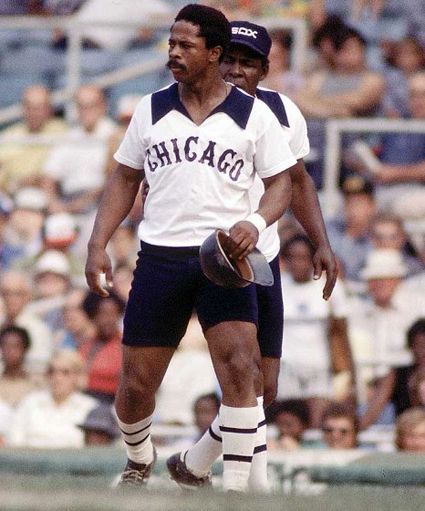
While many scoff at and scorn the Cooperalls, ranking them with other such sports uniform misfits as the 1976 Chicago White Sox shorts, we here at Third String Goalie embrace not only the concept of the Cooperalls, but their look as well. In our opinion, they made the players look taller and sleeker. If football and baseball players can look good in long pants, why not hockey players?

Flyers 81-82 Cooperalls

Even the basic idea of long pants for hockey players just makes so much sense to us. Why players would ever wear short pants for a winter sport played on ice, we will never quite understand...

The Cooperalls were first developed in order to increase player safety and protection, as the pads under the Cooperalls were held tightly to the body, unable to shift out of place like the current pads of the day, which would leave the player exposed to injuries, their tailbone in particular.

The original "Cooperalls" worn by the Flyers in 1981-82 were black with an orange stripe trimmed in white which ran down the length of the leg and were actually not Cooperalls, but a CCM version of the Cooperalls called CCM Pro Guard. Philadelphia completed their first season in the long pants with a 38-31-11 record, which was good for 87 points, placing them sixth in the Wales Conference.

Flyers 81-82 Cooperalls

Cooperalls were also reportedly worn by the Toronto Maple Leafs during the 1981-82 pre-season, but despite a reported game worn pair for sale on ebay, no photographic or video evidence of game action to support this claim is readily available.

Maple Leafs Cooperalls

For the 1982-83 season, the Flyers long pants returned, only this time in solid black, adorned only with a large Flyers logo at the ankle of each leg. Philadelphia rose to a 49-23-8 record, good for a Patrick Division title and second overall in the Wales Conference. Unfortunately for the Flyers faithful, they would be eliminated in the first round of the playoffs both seasons at the hands of the New York Rangers.

Flyers 82-83 Cooperalls

The Flyers were joined by the Hartford Whalers in wearing "Cooperalls" for the 1982-83 season, with the Whalers version featuring a full-length pair of blue stripes surrounded by three white stripes, which again were actually the CCM version.

Whalers Cooperalls

The Whalers did the full length pants look no favors with their on-ice performance, as they tied for last in the league with 45 points following a 19-54-7 record.

Following the 1982-83 season the NHL outlawed the long pants on the grounds of player safety, as the outer fabric of the pants was made out of what was comparable to a nylon windbreaker which was more slippery than the traditional hockey pants/knit socks combination, and any player who fell while wearing them would skid relatively unabated into the boards at a much faster speed than previously.

Cooperalls fall

Still, it wasn't just the Flyers and Whalers who wore the "Cooperalls", as Canada's junior leagues and high schools in Minnesota also wore them for a period of time.

Shanahan Knights
Brendan Shanahan of the London Knights in his Cooperalls

Brett Hull Penticton Vees Cooperalls
Brett Hull of the Penticton Vees sporting his Cooperalls

For those of you who think that 1983 was the last of the "Cooperalls" on NHL ice, think again, for it was on Halloween night in 2002 that Jeremy Roenick took to the ice during warmups for the Flyers upcoming game against the Phoenix Coyotes wearing a blond wig, blacked-out front teeth, striped "Cooperalls" and a #16 Bobby Clarke sweater!

Roenick Clarke Cooperalls

Perhaps it's now time to revisit the idea of the long pants. We're actually surprised that Reebok hasn't taken this one on yet. After all, they were bold enough to reinvent the hockey jersey, so why not change the pants while you are at it? Doing so certainly would have no doubt taken away some of the negative attention the the jerseys at the time.

Additionally, in the last 30 years there certainly have been many innovations and advances in fabric technology to the point that the basic excuse for banning Cooperalls in the first place, the slick fabric, could now easily be addressed by any number of equipment manufacturers.

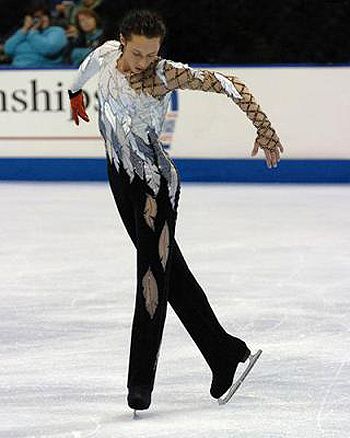
After all, think of all the other men's sports at the Winter Olympics, alpine and cross-country skiing, bobsled and luge, curling, figure skating, speed skating, ski jumping and snowboarding, and just how many of those winter sports feature competitors wearing short pants? Right. Not one. Not even figure skating's Johnny Weir.

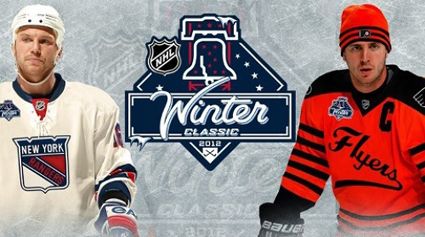
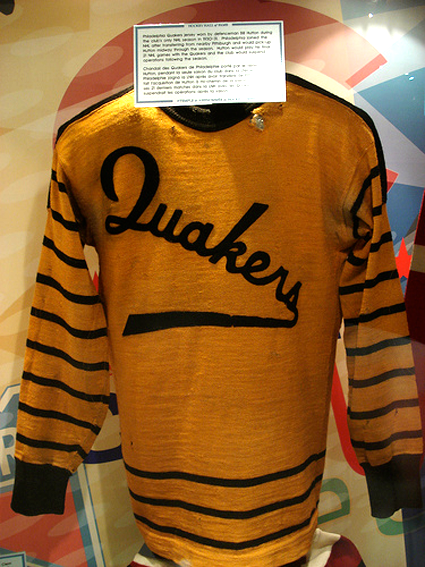
Even if the old guard would refuse to allow the return of the late, great Cooperalls full time, there is an opportunity staring us in the face that is just too good to pass up. The Flyers have been chosen to host the 2012 Winter Classic. In advance of that announcement some clever designer proposed a Flyers jersey based on the original Philadelphia franchise of the 1930's, the Quakers. While it is a darn fine concept, it was immediately put into production by the Chinese knockoff industry, ruining it's chances at life, as to now select that design would be to validate the bootleggers already extensive production run which has now flooded the market.

With that design now seemingly out, and the Flyers having had so few changes in style of their sweaters over the last 40 plus years, the one thing that has changed has been their pants, and the time is right for a return to the Cooperalls/CCM PRo Guard long pants of yore. It is, after all, an outdoor game, and wouldn't a nice warm pair of long pants (perhaps lined with some modern high tech Therma Base/Polartec/Thermal Dri-FIT/Play Warm fabric) be just the thing to keep you warm against winter's chill rather than shorts and socks? Jeremy Roenick thinks so...

Roenick Clarke Cooperalls

Perhaps we could be so bold as to suggest denim Cooperalls for that "old time pond hockey look" for this year's Winter Classic? Now we're talking!

Flyers denim pants
Daniel Briere, Simon Gagne and Braydon Coburn modeling the Flyers 2010 Winter Classic jerseys, complete with long pants,
an idea whose time has returned!

Today's featured pants are the 1981-82 Philadelphia Flyers "Cooperalls". Not actually Cooperalls, but CCM Pro Guard pants, they were worn for only a single season. These pants, with their elegant long stripe down the leg, which served to accentuate that the pants were indeed full length, were a shock to the established look when they first appeared.

The stripe on the Flyers pants disappeared for the second season, with just a Flyers logo waaaaay down by the ankle of the otherwise all-black pants. Meanwhile, four hours to the north, the Hartford Whalers also adopted the long pants for one season and went all out to call attention to the full length of their pants with no less than five alternating white and green stripes.

While Philadelphia and Hartford actually both wore the CCM Pro Guard pants, the name "Cooperalls" has become the popular nomenclature for the full length hockey pants in the same way that all brands of tissues are commonly referred to as "Kleenex" while copiers are often referred to as a "Xerox machine" regardless of brand.

Philadelphia Flyers 81-82 Barber Cooperalls

Today's video segment begins with footage of the Flyers wearing their Cooperalls from the first season of use, noted by the orange stripe down the legs.


This next clip from the WHL features Cam Neely of the Portland Winterhawks going toe-to-toe with Shawn Green of the New Westminster Bruins while both were wearing Cooperalls in the 1983-84 season.


In this next clip from the 1984 Minnesota State High School Hockey Tournament, St. Paul Johnson takes on the Hill-Murray Pioneers during the Cooperall era. Note the clear boards of the old St. Paul Civic Center to complete the obscurity double!


Even French-Canadians and Soviets liked Cooperalls!


Tuesday, May 24, 2011

1984-85 Philadelphia Flyers Pelle Lindbergh Jersey

Born on this date in 1959 in Stockholm, Sweden Per-Eric "Pelle" Lindbergh made his debut with Hammarby IF of Stockholm's junior team in 1975 and made his international debut for the Sweden National Team that same season in the European Junior Championships earning the silver medal as well as the award for Best Goaltender. A second season with Hammarby as well as a second European Junior Championship appearance followed in 1976-77, which resulted in a gold medal as well as a second Best Goaltender award at the 1977 EJC.

Pelle LIndbergh Hammarby
Lindbergh in goal for Hammarby. Note the
Flyers logos on his mask even then.

His first season with Hammarby IF in Sweden's Division 1 in 1977-78 was highlighted with four games played at the newly promoted World Junior Championships, backstopping Sweden to a silver medal. At the time, NHL players had begun appearing in the World Championships, beginning in 1976. International Ice Hockey Federation officials began to fear that true amateur and younger players were losing their places they traditionally held with teams at the World Championships, so the Under-20 Junior Championships were elevated to full world championship status in 1977.

A second season with Hammarby IF in Division 1 in 1978-79 saw him named Best Goaltender at the 1979 World Junior Championships, where Sweden would win the bronze medal, followed by making his debut with the Sweden National Team at the senior level at that year's World Championships in Moscow, helping Sweden to a bronze medal finish. He was also drafted by the Philadelphia Flyers 35th overall in the 1979 NHL Entry Draft and the second goaltender and second European taken that year.

1979-80 was a breakthrough season for the young netminder, as he would take over the starting role in goal for AIK Stockholm in the Elitserien, Sweden's highest professional level, appearing in 32 games and being named to the 1980 Swedish Olympic Team. Lindbergh would appear in five of Sweden's seven games as Sweden won the bronze medal.

He would make his NHL debut with the Maine Mariners of the American Hockey League in 1980-81, winning the Hap Homes Award, the Les Cunningham Rookie of the Year Award and the Red Garrett Most Valuable Player Award honors after a stellar 31-14-5 record in the regular season and a 10-7 mark in the playoffs as Maine reached the Calder Cup Finals.

Prior to the next season, Lindbergh was named to the Sweden National Team's roster for the 1981 Canada Cup tournament. He would split time in 1981-82 between the Mariners (25 games) and make his NHL debut with the Flyers with eight games, posting a 2-4-2 record.

The departure of Pete Peeters for the Boston Bruins opened up more time for Lindbergh in 1982-83, as he became the number one goaltender for the Flyers, appearing in 40 games, posting a 23-13-3 record and was named to the NHL All-Rookie Team and played in his first NHL All-Star Game. Following the NHL season Lindbergh played in his second World Championships for Sweden and yet another medal, this time a bronze, his seventh international medal.

Pelle LIndberg
Lindbergh at his first NHL All-Star Game in 1983.

Bob Froese took the majority of the starts in Philadelphia in 1983-84 with 48 games played, with Lindbergh finishing with a 16-13-3 mark in 36 appearances.

The high point of Lindbergh's career came in the 1984-85 season, when Lindbergh saw the bulk of the workload, seeing action in 65 games while going 40-17-7 to lead the league in wins and help the Flyers reach the Stanley Cup Finals. His outstanding play was rewarded with his second NHL All-Star Game appearance as well as being named the recipient of the 1985 Vezina Trophy, the first European goaltender in NHL history to ever win the award.

Pelle LIndberg
Lindbergh with the Vezina Trophy.

Lindbergh also became the first goaltender to bring a water bottle with him on the ice during a game to combat severe dehydration that plagued him, a now accepted and regular practice.

In addition, Lindbergh was also known for his stark white goalie mask used during a period when nearly all goalie masks were adorned with increasingly elaborate paint schemes to reflect either the team's identity or their individual personality. The mask was a replica of his idol and goaltending coach, former Flyer goalie Bernie Parent.

Pelle LIndberg

Following his Vezina Trophy winning season, Lindbergh signed a six year contract with the Flyers and bought himself a 565 horsepower, customized Porsche 930 Turbo. He began the 1985-86 season in good form, winning six of his first eight starts, but tragedy struck when Lindbergh crashed his car while driving impaired on November 10, 1985, leaving him brain-dead and his two passengers seriously injured. Lindbergh was kept on life support long enough for his father to arrive from Sweden to join Lindbergh's mother, who was already in the United States on a visit, to say goodbye and then make the final decision to donate his organs and end life support on November 12th. Lindbergh was just 26 years old.

His death stunned is teammates, the city of Philadelphia and the nation of Sweden. Fans then made Lindbergh the top vote getter for the 1986 NHL All-Star Game, the first time a player was chosen posthumously for an all-team in North American sports.

While Lindbergh's #31 was never officially retired, no Flyer has worn the number since.

The Flyers created the Pelle Lindbergh Memorial Award in 1994, given annually to the Most Improved Player each season.

For more on the life and career of Pelle Lindbergh, we recommend Pelle Lindbergh: Behind the White Mask.


Today's featured jersey is a 1984-85 Philadelphia Flyers Pelle Lindbergh jersey from the season he recorded his career high 40 wins. The Flyers adopted this modernized version of their classic jersey in 1982-83, Lindbergh's second season with Philadelphia. It featured the addition of more black trim to separate the orange arm coloring from the white of the body and was made by Sandow SK. The following season the jersey remained the same, but was now made by CCM. One season later the Flyers jerseys again were rebranded, this time by Eagle.

This style Flyers jersey was essentially carved in stone, as it remained unchanged through the 2006-07 season after which it was replaced by the Reebok Edge jersey, sadly doing in an iconic jersey after 20 years of service.

Philadelphia Flyers 85-86 jersey


Bonus jersey: Today's bonus jersey is a 1979 Sweden National Team Pelle Lindbergh jersey as worn in the 1979 World Junior Tournament which took place in Sweden. Lindbergh was named the Best Goaltender and helped Sweden earn a bronze medal that year.

This jersey is from a period of time in the late 70's/early 80's when Sweden moved away from their traditional three crowns logo and instead sports the phrase "Tre Kronor", which translates to "Three Crowns".

Sweden 1979 WJC jersey


While there are numerous Lindbergh game highlights, news reports and tributes available, we chose to feature this excellent tribute today.


Tuesday, March 1, 2011

1967-68 Philadelphia Flyers Forbes Kennedy Jersey

Opened on September 30, 1967, the Spectrum became home to both the expansion Philadelphia Flyers of the NHL as well as the Philadelphia 76ers of the NBA.

Spectrum
The Spectrum

Construction began in June of 1966 and was completed in 16 months at a cost of $7 million. The name Spectrum was chosen to represent the wide range of events that would be held there.

On October 19th, the Flyers shut out the Pittsburgh Penguins 1-0 with Bill Sutherland scoring the first goal in the building's history during their first ever home game in front of 7,812 fans.

With all six of the new expansion teams being placed in the West Division in 1967-68, the Flyers fared quite well. While all the expansion clubs were regularly defeated by the Original 6 teams which comprised the East Division, the Flyers were able to defeat all of the established clubs to gain valuable points in the standings as well as hold their own against the expansion cousins.

On February 17, 1968 the Ice Capades to move in for their show in Philadelphia. The 11,000 in attendance that afternoon got more than the bargained for when high winds blew a large section of the roof off the building with a thunderous roar, letting daylight into the arena. With the Flyers on a road trip until the 22nd, a patch was put on the roof and the Flyers completed a three game homestand without any further issues.

Going into the last of the three games on February 29th, 1968 (yes, it was a Leap Year), the Flyers were sitting at 26-24-9 with 61 points. They lost to the Los Angeles Kings 3-1 that night and then vacated the Spectrum to travel to New York to face the Rangers on March 2nd.

On this date in 1968, the winds once again blew with such force that more of the roofing was torn from the roof. Then Philadelphia Mayor James H. J. Tate surveyed the damage in person and then announced the Spectrum was closed for repairs indefinitely, forcing the Flyers to vacate the Spectrum for their remaining seven home games while repairs were conducted.

The extended time to conduct the repairs, which in reality should have taken less than two weeks was a result of the political wrangling over the situation between Republican Walter Annenberg, publisher of the Philadelphia Inquirer and Democrat Matthew McCloskey, owner of the firm who constructed the Spectrum on a limited budget due to the finances of Jerry Wolman, owner of the Philadelphia Eagles who paid for the construction of the stadium but started to run out of money before it was completed, resulting in a number of cutbacks.

More political posturing occurred between Mayor Tate, a democrat, and Arlen Specter, the city's District Attorney, and the man who Tate just happened to defeat for the Mayor's office! Specter sent his own investigators to the scene, knowing both Woman and McCloskey had contributed to Tate's campaign, looking to uncover as much evidence to use against his foes as possible.

Spectrum management, eager to get back in business as quickly as possible reminded everyone the job was rushed with everyone's knowledge in order to get the Flyers franchise. "If we'd followed every damn semicolon," said Hal Freeman, president of the Spectrum, "it would have taken three years to finish the place. Everyone knew there would be shortcuts. But we've passed every inspection required, as far as I know."

Tate, proceeding with as much care and concern as possible to keep himself from being subject to any further political scrutiny by the Inquirer, ordered the Franklin Institute to conduct tests on the new roofing materials, including some in a wind tunnel, as well as research into which kind of fasteners should be used to attach the roof. Not wanting to risk their scientific reputation, the institute took care to make an informed decision. All of this led to the extended delay in getting the roof repairs completed, sending the Flyers on the road for the final month of the season.

While the 76ers were able to simply move back to their previous home, Convention Hall, the other possibly suitable arenas in Philadelphia were not equipped to make ice back in those days. With no other options remaining in Philadelphia, the Flyers next "home" game was played in Madison Square Garden in New York City on March 3rd, (the day after the Flyers played the Rangers there) 100 miles northeast, where they tied the Oakland Seals 1-1 in front of 12,127.

The Flyers then traveled to Toronto to play the Maple Leafs on March 6th, losing 7-2, and then stayed in town to "host" Boston the next night in Maple Leaf Gardens, a game they also lost 2-1 while drawing 10,452.

A more permanent plan was put into place during the three days before their next game, as the Flyers remaining home games for the rest of the regular season were now to be played at Le Colisee in Quebec City, in Canada, which was home to the Flyers top minor league affiliate, the Quebec Aces of the American Hockey League.

Life in French speaking Canada agreed with the Flyers, as they shut out the Minnesota North Stars 2-0 behind the goaltending of Bernie Parent on March 10th with 10,171 in attendance. After defeating the North Stars again in Minnesota on March 13th, they returned "home" to Quebec to tie the Kings with just 4,116 on hand. Things were quite different when the Maple Leafs made the trip to Quebec as 13,650 were in attendance for the popular Canadian opponents, whom the Flyers defeated 7-4.

After three road games Philadelphia returned to Le Colisee for a pair of vital games as work continued on the Spectrum's roof, as the Flyers were in a tie with the Kings for first place in the division with three games left on the schedule with 71 points each.

On March 28th, the Flyers got a second period goal from Gary Dornhoefer at 4:21 and an empty net goal from Andre Lacroix to seal a 2-0 shutout by Doug Favell as watched by 5,382. The two points put Philadelphia at 73 points to the Kings 71. Two nights Pittsburgh shut out the Flyers 2-0 in Quebec, but they clinched the division with one game left to play when the Kings drew with Oakland later that day out in California during the final game on their schedule.

The Flyers dropped their final game of the season 5-1 to the Penguins in Pittsburgh to finish the season with 73 points to the Kings 72. St. Louis came third with 70 points and became the Flyers first round playoff opponent.

The two teams met at the now repaired Spectrum on April 4, 1968 for the first game in Philadelphia since February 29th. During the Flyers month long road trip in March, the club was 5-7-2 including a 3-1-1 record for games in Quebec and 3-2-2 including their relocated games in New York and Toronto.

Their playoff series went the full seven games, including wins at home in Game 2 and Game 5, but lost at home 3-1 in the deciding Game 7 to end the tumultuous finish to their season.

Throughout it's history the Spectrum saw the Flyers win the Stanley Cup at home in 1974, defeat the Soviet Central Red Army in a memorable, if not notorious, game in 1976. Later that season it also hosted to games of the inaugural Canada Cup when the United States played Czechoslovakia and the Soviet Union. It would later host Stanley Cup Finals games in 1975, 1976, 1980, 1985 and 1987.

Spectrum banners
The Flyers retired numbers hang from the Spectrum ceiling

The NHL All-Star Game was played there in both 1976 and 1992, as well as the NBA's All-Star Game in 1970 and 1976, making it the only arena's to host both All-Star Games in the same year. The NBA finals were also held there in 1977, 1980 (during the same time period the Flyers were also in the finals, 1982 and 1983.

Once the Flyers moved to a new arena, their top minor league club, the Philadelphia Phantoms called the Spectrum home from 1996 to 2009, including winning the Calder Cup in 1998 on home ice.

Spectrum logo
The jersey patch worn by the Phantoms during the Spectrum's final season

Additionally, the arena hosted the NCAA Final Four in 1976 and 1981, as well as numerous rodeos, professional wrestling cards, Concerts, including Elvis Presley, The Doors, Pink Floyd and The Who.

The Flyers continued to play in the Spectrum until the 1995-96 season until moving to the new CoreStates Center, which has since been renamed three times through various naming rights deals. After the departure of the Flyers and 76ers, the arena continued to operate as usual, which included being home to the Phantoms, as well as indoor soccer and arena football clubs.

Finally the Spectrum was closed on October 31, 2009 and demolition began in late November of 2010.

Spectrum wrecking ball
The wrecking ball begins to take down the Spectrum

Today's featured jersey is a 1967-68 Philadelphia Flyers Forbes Kennedy jersey from the Flyers inaugural season. For the Flyers first three seasons they wore simple one color numbers and no names on the backs of their sweaters. They were the first team to use orange as their primary color.

The front of their jersey was decorated with their Flying P logo, which has remained in use throughout the entire history of the team and has aged very well over time. The basic flyers sweater design of the color running down and then wrapping around the arms just above the wrists, which have always been black on both the home or road style, was a popular style at the time and the Flyers have stuck with them, although in a modified form with the introduction of the new Reebok jerseys in 2007, only to see it return in 2008 with a new retro style alternate jersey, since promoted to their primary home jersey.

Kennedy played in 603 NHL games, scoring 70 goals and 178 points as well as 988 penalty minutes. While a smaller player, he was known for his toughness and grit, making him an early fan favorite with the fans in Philadelphia.

His NHL career began in 1956 with the Chicago Black Hawks and he subsequently played for Detroit and Boston prior to joining the Flyers in 1967-68. After playing 59 games for the Flyers in 1968-69, he was traded to the Maple Leafs where his NHL career concluded.

Philadelphia Flyers 67-68 jersey

Today's video segment begins with the Top 10 moments in Spectrum history.


Next, the Flyers win the Stanley Cup on Spectrum ice in 1974. Look at all those fans on the ice afterwards!


Friday, May 28, 2010

1984-85 Philadelphia Flyers Mark Howe Jersey

Born on this date in 1955, Mark Howe first gained recognition as a surprising addition as member of the 1972 United States Olympic Team that won a remarkable silver medal in Sapporo, Japan. At just 16 years old, and still only a high school junior who had just recently gotten his driver's license and playing on a team with Vietnam War veterans, he remains the youngest member of a US Olympic Hockey Team ever.

1972 USA Olympic team
1972 United States Olympic Team - Mark Howe, back row first on left

"We picked Mark up, and he played some exhibition games with us. We needed a left winger. He was on our list for skill and attitude. The maturity level of this kid was overwhelming. He was a big part of the team. He was tougher than hell. Vlclav Nedomansky of Czechoslovakia nailed him in a preseason game, and he didn't know where he was, but it didn't bother him at all. I used him as a forward, and he became a Hall of Fame defenseman."
Howe recalls,
"The whole thing was just a great, great learning experience. The way I looked at it for my career, it was a huge stepping-stone. I learned more in the six weeks I was gone than I learned in the years and years of going to school. I mean, just about life in general - and just seeing the talent of the players from overseas, watching the Soviets play was a whole new level. Coach Williamson pushed me hard. I was a scorer. But when I went to that team, I wasn't. I was the guy who provided energy. I had to fit into a role, and so for me, it was a completely different experience - a tremendous learning experience."
During the medal ceremony as Howe stood with a silver medal around his neck, it finally struck him that this was a moment to savor.
"I remember looking up at the flag, and that's when I realized what an honor it was the play and represent your country. No matter what I did, I always gave the best I could. Seeing the flag of your country being raised - even though there was one a little higher than ours - was my fondest moment."
He then added to his resume by winning a Memorial Cup in 1973 as a member of the Toronto Marlboros of the Ontario Hockey League and was named the tourament's Most Valuable Player in the process.

At a time when the NHL had an minimum age limit of 20 for it's players, the 18 year old Howe turned professional during the NHL/WHA rivalry in a headline-grabbing signing to play for the Houston Aeros of the WHA along side his brother Marty and his legendary father Gordie, who was lured out of retirement for the opportunity to play with his sons.

Mark,Gordie and Marty Howe

Mark scored his first goal 27 years to the day after his father scored for the first time for the Detroit Red Wings. His trophy cabinet continued to grow, as Mark was awarded the Lou Kaplan Award as WHA Rookie of the Year and the Aeros won the Avco World Trophy in 1974. In 1975 the Aeros repeated as champions of the WHA and Howe was the leading playoff scorer with 22 points in 13 games. He was also named to Team Canada for the 1974 Summit Series against the Soviet Union.

Howe, who began his career as a wing, had moved back to defense by 1976-77 and the trio of Howes signed with the New England Whalers for the 1977-78 season. They continued to play together through the 1979-80 season when the Whalers became members of the NHL. While he regularly scored in the mid-70's points-wise in Houston, his offensive game came alive in New England, first with 91 points in 1977-78 which was followed by 107 points in the final WHA season of 1978-79 before scoring 80 in his first NHL season.

Howe Family Whalers

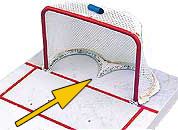
After Gordie retired following the 1979-80 season, Mark no longer had to play in his father's shadow and was named to his first NHL All-Star Game in 1981 and was later played for the United States in the 1981 Canada Cup. After one more season in Hartford, Howe was traded to the Philadelphia Flyers at the 1983 draft following concerns after a grisly injury in which he was impaled in the thigh by the pointed center of a goal. His recovery required a liquid diet for a period of time that resulted in him losing 24 pounds. His injury resulted in a redesign for goal frames and the way they were held in place on the ice.

He rebounded from his injury and excelled as a member of some great defensive teams of the era. Howe played in his second All-Star Game and was a finalist for the Norris Trophy in 1983 and played in the Stanley Cup Finals in 1985.

He had perhaps the best season of his career in 1985-86, setting NHL career highs with 24 goals, 58 assists and 82 points, made his third All-Star Game, was the NHL plus/minus leader at +85 and came in second in voting for the Norris Trophy.

Mark Howe Flyers

In 1986-87 Howe helped lead the Flyers to the 1987 Stanley Cup Finals while contributing 12 points in 26 games from the blueline and was a Norris finalist for the third time.

After playing 75 games in 1987-88 and his fourth All-Star Game, back and knee injuries would limit him to no more than 60 games for the remaining seven seasons of his career. After four more seasons with the Flyers, Howe signed as a free agent with the Detroit Red Wings, the club his father gained most of his fame with.

While healthy, Howe provided veteran leadership to the Red Wings defensive corps, which included a young Nicklas Lidstrom. The Red Wings began a transformation in 1993-94 with the arrival of Scotty Bowman as coach and made the Stanley Cup Finals in 1995, their first finals appearance since 1966.

After one more season, in which he was limited to just 18 games, Howe retired with 929 NHL games and 426 in the WHA for a combined 405 goals and 841 assists for 1246 points and was elected to the United States Hockey Hall of Fame in 2003.

Today's featured jersey is a 1984-85 Philadelphia Flyers Mark Howe jersey. 1984-85 was Howe's third season with Philadelphia and he scored 18 goals and 57 points and made it to the Stanley Cup Finals the season he wore this jersey.

The Flyers jerseys remained relatively unchanged from their introduction in 1967 with only gradual detail changes such as the addition of black outlines separating the sleeve and body colors in 1982 and tweaks to the names and numbering style.

Philadelphia Flyers jersey,Hockey jersey

Today's video segment is a look at Mark Howe, followed by an interview with him while he was with the Whalers in the WHA.


Here is a great interview with Howe on the occasion of his return to Detroit.


Finally, here is Mark answering a question about successful players from his son Travis.


Monday, May 24, 2010

1979 Sweden National Team Pelle Lindbergh Jersey

Born on this date in 1959 in Stockholm, Sweden Per-Eric "Pelle" Lindbergh made his debut with Hammarby IF of Stockholm's junior team in 1975 and made his international debut for the Sweden National Team that same season in the European Junior Championships earning the silver medal as well as the award for Best Goaltender. A second season with Hammarby as well as a second European Junior Championship appearance followed in 1976-77, which resulted in a gold medal as well as a second Best Goaltender award at the 1977 EJC.

Pelle LIndbergh Hammarby
Lindbergh in goal for Hammarby. Note the
Flyers logos on his mask even then.

His first season with Hammarby IF in Sweden's Division 1 in 1977-78 was highlighted with four games played at the newly promoted World Junior Championships, backstopping Sweden to a silver medal. At the time, NHL players had begun appearing in the World Championships, beginning in 1976. International Ice Hockey Federation officials began to fear that true amateur and younger players were losing their places they traditionally held with teams at the World Championships, so the Under-20 Junior Championships were elevated to full world championship status in 1977.

A second season with Hammarby IF in Division 1 in 1978-79 saw him named Best Goaltender at the 1979 World Junior Championships, where Sweden would win the bronze medal, followed by making his debut with the Sweden National Team at the senior level at that year's World Championships in Moscow, helping Sweden to a bronze medal finish. He was also drafted by the Philadelphia Flyers 35th overall in the 1979 NHL Entry Draft and the second goaltender and second European taken that year.

1979-80 was a breakthrough season for the young netminder, as he would take over the starting role in goal for AIK Stockholm in the Elitserien, Sweden's highest professional level, appearing in 32 games and being named to the 1980 Swedish Olympic Team. Lindbergh would appear in five of Sweden's seven games as Sweden won the bronze medal.

He would make his NHL debut with the Maine Mariners of the American Hockey League in 1980-81, winning the Hap Homes Award, the Les Cunningham Rookie of the Year Award and the Red Garrett Most Valuable Player Award honors after a stellar 31-14-5 record in the regular season and a 10-7 mark in the playoffs as Maine reached the Calder Cup Finals.

Prior to the next season, Lindbergh was named to the Sweden National Team's roster for the 1981 Canada Cup tournament. He would split time in 1981-82 between the Mariners (25 games) and make his NHL debut with the Flyers with eight games, posting a 2-4-2 record.

The departure of Pete Peeters for the Boston Bruins opened up more time for Lindbergh in 1982-83, as he became the number one goaltender for the Flyers, appearing in 40 games, posting a 23-13-3 record and was named to the NHL All-Rookie Team and played in his first NHL All-Star Game. Following the NHL season Lindbergh played in his second World Championships for Sweden and yet another medal, this time a bronze, his seventh international medal.

Pelle LIndberg
Lindbergh at his first NHL All-Star Game in 1983.

Bob Froese took the majority of the starts in Philadelphia in 1983-84 with 48 games played, with Lindbergh finishing with a 16-13-3 mark in 36 appearances.

The high point of Lindbergh's career came in the 1984-85 season, when Lindbergh saw the bulk of the workload, seeing action in 65 games while going 40-17-7 to lead the league in wins and help the Flyers reach the Stanley Cup Finals. His outstanding play was rewarded with his second NHL All-Star Game appearance as well as being named the recipient of the 1985 Vezina Trophy, the first European goaltender in NHL history to ever win the award.

Pelle LIndberg
Lindbergh with the Vezina Trophy.

Lindbergh also became the first goaltender to bring a water bottle with him on the ice during a game to combat severe dehydration that plagued him, a now accepted and regular practice.

In addition, Lindbergh was also known for his stark white goalie mask used during a period when nearly all goalie masks were adorned with increasingly elaborate paint schemes to reflect either the team's identity or their individual personality. The mask was a replica of his idol and goaltending coach, former Flyer goalie Bernie Parent.

Pelle LIndberg

Following his Vezina Trophy winning season, Lindbergh signed a six year contract with the Flyers and bought himself a 565 horsepower, customized Porsche 930 Turbo. He began the 1985-86 season in good form, winning six of his first eight starts, but tragedy struck when Lindbergh crashed his car while driving impaired on November 10, 1985, leaving him brain-dead and his two passengers seriously injured. Lindbergh was kept on life support long enough for his father to arrive from Sweden to join Lindbergh's mother, who was already in the United States on a visit, to say goodbye and then make the final decision to donate his organs and end life support on November 12th. Lindbergh was just 26 years old.

His death stunned is teammates, the city of Philadelphia and the nation of Sweden. Fans then made Lindbergh the top vote getter for the 1986 NHL All-Star Game, the first time a player was chosen posthumously for an all-team in North American sports.

While Lindbergh's #31 was never officially retired, no Flyer has worn the number since.

The Flyers created the Pelle Lindbergh Memorial Award in 1994, given annually to the Most Improved Player each season.

For more on the life and career of Pelle Lindbergh, we recommend Pelle Lindbergh: Behind the White Mask.


Today's featured jersey is a 1979 Sweden National Team Pelle Lindbergh jersey as worn in the 1979 World Junior Tournament which took place in Sweden. Lindbergh was named the Best Goaltender and helped Sweden earn a bronze medal that year.

This jersey is from a period of time in the late 70's/early 80's when Sweden moved away from their traditional three crowns logo and instead sports the phrase "Tre Kronor", which translates to "Three Crowns".

Sweden 1979 WJC jersey

Bonus Jersey: Today's Bonus Jersey is a 1985-86 Philadelphia Flyers Pelle Eklund jersey which features the #31 memorial to Pelle Lindberg worn following his death in November of that season. Eklund, a fellow Swede, was Lindbergh's rookie teammate for the first eight games of the 1985-86 season and would go on to play nine seasons with the Flyers.

Philadelphia Flyers Eklund jersey
Pelle LIndberg memorial
While there are numerous Lindbergh game highlights, news reports and tributes available, we chose to feature this excellent tribute today.